ORENCIA is a selective T cell costimulation modulator indicated for: the treatment of adult patients with moderately to severely active rheumatoid arthritis (RA). (1.1) the treatment of patients 2 years of age and older with moderately to severely active polyarticular juvenile idiopathic arthritis (pJIA). (1.2) the treatment of patients 2 years of age and older with active psoriatic arthritis (PsA).
💊How to take it
Intravenous Use for Adult RA (2.1) and Adult PsA (2.3) Administer at 0, 2, and 4 weeks, and every 4 weeks thereafter, as a 30-minute infusion Body Weight of Patient Dose Number of Vials Less than 60 kg 500 mg 2 60 to 100 kg 750 mg 3 More than 100 kg 1,000 mg 4 Subcutaneous Use for Adult RA (2.1) Prior to the first subcutaneous dose, may administer an optional loading dose as a single intravenous infusion as per body weight categories above.
ℹ️Common side effects
In Study V, adult COPD patients treated with ORENCIA for RA developed adverse reactions more frequently than those treated with placebo, including COPD exacerbations, cough, rhonchi, and dyspnea. A greater percentage of patients treated with ORENCIA developed a serious adverse event compared to patients treated with placebo (27% vs 6%) [see Clinical Studies (14.1) and Adverse Reactions (6.1)].
⚠️Serious risks
Concomitant use with a TNF antagonist can increase the risk of infections and serious infections. (5.1) Hypersensitivity and anaphylaxis have occurred. (5.2) Serious infections reported. Patients with a history of recurrent infections or underlying conditions predisposing to infections may experience more infections. Discontinue if a serious infection develops. (5.3) Screen for latent TB infection prior to initiating therapy.
📦Storage & missed dose
Storage Refrigerate ORENCIA lyophilized powder supplied in a vial at 2 C to 8 C (36 F to 46 F). Do not use beyond the expiration date on the vial. Protect the vials from light by storing in the original package until time of use. Refrigerate ORENCIA solution supplied in a prefilled syringe or ClickJect autoinjector at 2 C to 8 C (36 F to 46 F). Do not use beyond the expiration date on the prefilled syringe or autoinjector. Protect from light by storing in the original package until time of use.
Questions answered from this medication guide. Sign in to personalize with your meds & labs.
Abatacept (Orencia) Prices
Current MedMind pricing — no insurance required
ORENCIA is a selective T cell costimulation modulator indicated for: the treatment of adult patients with moderately to severely active rheumatoid arthritis (RA). (1.1) the treatment of patients 2 years of age and older with moderately to severely active polyarticular juvenile idiopathic arthritis (pJIA). (1.2) the treatment of patients 2 years of age and older with active psoriatic arthritis (PsA). (1.3) the prophylaxis of acute graft versus host disease (aGVHD), in combination with a calcineurin inhibitor and methotrexate, in adults and pediatric patients 2 years of age and older undergoing hematopoietic stem cell transplantation (HSCT) from a matched or 1 allele-mismatched unrelated donor. (1.4) Limitations of Use: Concomitant use of ORENCIA with other immunosuppressives [e.g., biologic disease-modifying antirheumatic drugs (bDMARDS), Janus kinase (JAK) inhibitors] is not recommended (1.5, 5.1).
ORENCIA is indicated for the treatment of adult patients with moderately to severely active rheumatoid arthritis (RA).
ORENCIA is indicated for the treatment of patients 2 years of age and older with moderately to severely active polyarticular juvenile idiopathic arthritis (pJIA).
ORENCIA is indicated for the treatment of patients 2 years of age and older with active psoriatic arthritis (PsA).
ORENCIA is indicated for the prophylaxis of acute graft versus host disease (aGVHD), in combination with a calcineurin inhibitor and methotrexate, in adults and pediatric patients 2 years of age and older undergoing hematopoietic stem cell transplantation (HSCT) from a matched or 1 allele-mismatched unrelated-donor.
The concomitant use of ORENCIA with other potent immunosuppressants [e.g., biologic disease-modifying antirheumatic drugs (bDMARDs), Janus kinase (JAK) inhibitors] is not recommended.
Intravenous Use for Adult RA (2.1) and Adult PsA (2.3) Administer at 0, 2, and 4 weeks, and every 4 weeks thereafter, as a 30-minute infusion Body Weight of Patient Dose Number of Vials Less than 60 kg 500 mg 2 60 to 100 kg 750 mg 3 More than 100 kg 1,000 mg 4 Subcutaneous Use for Adult RA (2.1) Prior to the first subcutaneous dose, may administer an optional loading dose as a single intravenous infusion as per body weight categories above. Administer 125 mg by subcutaneous injection once weekly (within a day of the intravenous infusion if infusion given). Patients switching from intravenous use to subcutaneous use, administer first subcutaneous dose instead of next scheduled intravenous dose. Intravenous Use for pJIA in Pediatric Patients 6 Years Old (2.2) Pediatric patients weighing <75 kg administer 10 mg/kg intravenously and those weighing 75 kg administer the adult intravenous dosing regimen (not to exceed a maximum dose of 1,000 mg), as a 30-minute infusion. Subsequently administer infusions at 2 and 4 weeks and every 4 weeks thereafter. Subcutaneous Use for pJIA and PsA in Pediatric Patients 2 Years Old (2.2) Administer subcutaneously without an intravenous loading dose Body Weight of Pediatric Patient Dose (once weekly) 10 kg to less than 25 kg 50 mg 25 kg to less than 50 kg 87.5 mg 50 kg or more 125 mg Subcutaneous Use for Adult PsA (2.3) Administer 125 mg by subcutaneous injection once weekly without an intravenous loading dose. Patients switching from intravenous use to subcutaneous use, administer first subcutaneous dose instead of next scheduled intravenous dose. Intravenous Use for Prophylaxis of aGVHD (2.4) For patients 6 years and older, administer at a 10 mg/kg dose (maximum dose 1,000 mg) as a 60-minute infusion on the day before transplantation, followed by a dose on Day 5, 14, and 28 after transplant. For patients 2 to less than 6 years old, administer a 15 mg/kg dose as a 60-minute infusion on the day before transplantation, followed by a 12 mg/kg dose as a 60-minute infusion on Day 5, 14, and 28 after transplant. Preparation and Administration Instructions (2.5, 2.6) Administer as a 30-minute intravenous infusion for RA, pJIA, and adult PsA (2.5). Administer as a 60-minute intravenous infusion for aGVHD prophylaxis (2.5). See the Full Prescribing Information for preparation and administration instructions for intravenous infusion and recommendations for subcutaneous use (2.5, 2.6). Prepare ORENCIA using only the silicone-free disposable syringe (2.5).
For adult patients with RA, administer as an intravenous infusion or as a subcutaneous injection. ORENCIA may be used as monotherapy or concomitantly with disease-modifying antirheumatic drugs (DMARDs) other than JAK inhibitors or bDMARDs (e.g., TNF antagonists).
Bristol-Myers Squibb CompanyPrinceton, New Jersey 08543 USAU.S. License Number 1713
For pediatric patients with pJIA, either administer ORENCIA as an intravenous infusion (only patients 6 years of age and older) or as a subcutaneous injection (only patients 2 years of age and older) [see Use in Specific Populations (8.4)]. ORENCIA may be used as monotherapy or concomitantly with methotrexate.
Adult Patients For adult patients with psoriatic arthritis, administer as an intravenous infusion or a subcutaneous injection. ORENCIA may be used with or without non-biologic DMARDs.
Antiviral Prophylactic Treatment Before administering ORENCIA, administer recommended antiviral prophylactic treatment for Epstein-Barr Virus (EBV) reactivation, and continue for six months following HSCT. In addition, consider prophylactic antivirals for Cytomegalovirus (CMV) infection/reactivation during treatment and for six months following HSCT [see Warnings and Precautions (5.7) ]. Intravenous Dosing Regimen For patients 6 years and older, administer ORENCIA 10 mg/kg (maximum dose of 1,000 mg) as an intravenous infusion over 60 minutes on the day before transplantation (Day -1), followed by administration on Days 5, 14, and 28 after transplantation. For patients 2 to less than 6 years old, administer ORENCIA 15 mg/kg as an intravenous infusion over 60 minutes on the day before transplantation (Day -1), followed by 12 mg/kg as an intravenous infusion over 60 minutes on Days 5, 14, and 28 after transplantation.
Calculate the ORENCIA dose, the total volume of reconstituted solution required, and the number of ORENCIA vials needed. For a full dose, less than the full contents of one vial or more than one vial may be needed. Using aseptic technique, reconstitute, dilute, and then administer ORENCIA as follows: Reconstitution 1)Use the vial only if the vacuum is present. 2)Reconstitute each vial of supplied ORENCIA lyophilized powder (each vial supplies 250 mg of abatacept) with 10 mL of Sterile Water for Injection, USP (direct the stream toward the inside wall of the vial) to obtain a concentration of 25 mg/mL. Use only the provided silicone-free syringe with an 18- to 21-gauge needle: a.If the ORENCIA lyophilized powder is accidently reconstituted using a siliconized syringe, the solution may develop a few translucent particles (discard any solutions prepared using siliconized syringes). b.If the silicone-free disposable syringe is dropped or becomes contaminated, use a new silicone-free disposable syringe. To obtain new silicone-free syringes, contact Bristol-Myers Squibb at 1-800-ORENCIA. 3)Gently swirl the vial to minimize foam formation, until the contents are completely dissolved. Do not shake. Avoid prolonged or vigorous agitation. 4)Upon complete dissolution of the lyophilized powder, vent the vial with a needle to dissipate any foam that may be present. 5)Visually inspect the reconstituted solution (the solution should be clear and colorless to pale yellow). Do not use if opaque particles, discoloration, or other foreign particles are present. 6)Repeat steps 2) through 5) if two, three, or four vials are needed for a dose (see Table 1). Dilution 7)Must further dilute the reconstituted ORENCIA solution to 100 mL as follows: a.From a 100 mL infusion bag or bottle of 0.9% Sodium Chloride Injection, USP, withdraw a volume equal to the volume of the reconstituted ORENCIA solution required for the patient s dose. b.Slowly add the reconstituted ORENCIA solution(s) into the infusion bag or bottle using the silicone-free disposable syringe provided with each vial . c.Gently mix. Do not shake the bag or bottle . The final concentration of abatacept in the bag or bottle will depend upon the amount of abatacept added, but will be no more than 10 mg/mL. Immediately discard any unused portion in the ORENCIA vial. Administration 8)Prior to administration, visually inspect the ORENCIA diluted solution for particulate matter and discoloration. Discard the diluted solution if any particulate matter or discoloration is observed. 9)Using an infusion set and a sterile, non-pyrogenic, low-protein-binding filter (pore size of 0.2 m to 1.2 m), administer the entire diluted ORENCIA solution over: 30 minutes for RA, pJIA, and adults with PsA 60 minutes for aGVHD prophylaxis 10)Must complete the infusion of the diluted ORENCIA solution within 24 hours of reconstitution of the ORENCIA vials. Do not infuse ORENCIA concomitantly in the same intravenous line with other agents. No physical or biochemical compatibility studies have been conducted to evaluate the coadministration of ORENCIA with other drugs. Storage of Diluted ORENCIA Solution May store the diluted ORENCIA solution at room temperature or refrigerate at 2 C to 8 C (36 F to 46 F) up to 24 hours before use. Discard the diluted solution if not administered within 24 hours.
ORENCIA prefilled syringes and ORENCIA ClickJect autoinjectors are intended for: Subcutaneous use only and are not intended for intravenous infusion. Use under the guidance of a healthcare practitioner. After proper training in subcutaneous injection technique, a patient or the patient s caregiver may administer a subcutaneous injection of ORENCIA (ClickJect autoinjector or prefilled syringe) if a healthcare practitioner determines that it is appropriate. Instruct patients and/or caregivers to follow the directions provided in the Instructions for Use for additional details on administration. Specifically instruct them to inject the full amount (which provides the proper dose of ORENCIA), rotate injection sites, and to avoid injections into areas where the skin is tender, bruised, red, or hard. Visually inspect for particulate matter and discoloration prior to administration. Do not use ORENCIA prefilled syringes or ORENCIA ClickJect autoinjectors exhibiting particulate matter or discoloration. ORENCIA should be clear to slightly opalescent and colorless to pale yellow.
Intravenous Infusion For injection: 250 mg lyophilized powder in a single-dose vial. (3) Subcutaneous Use Injection: 50 mg/0.4 mL, 87.5 mg/0.7 mL, 125 mg/mL solution in single-dose prefilled syringe. (3) Injection: 125 mg/mL solution in a single-dose prefilled ClickJect autoinjectors. (3)
Intravenous Infusion For injection: 250 mg white lyophilized powder in a single-dose vial [see Dosage and Administration (2.1, 2.2, 2.3, 2.5)]. Subcutaneous Use Injection: 50 mg/0.4 mL, 87.5 mg/0.7 mL, and 125 mg/mL of a clear to slightly opalescent, colorless to pale-yellow solution in a single-dose prefilled glass syringe. Injection: 125 mg/mL of a clear to slightly opalescent, colorless to pale-yellow solution in a single-dose prefilled ClickJect autoinjector.
None. None. (4)
Concomitant use with a TNF antagonist can increase the risk of infections and serious infections. (5.1) Hypersensitivity and anaphylaxis have occurred. (5.2) Serious infections reported. Patients with a history of recurrent infections or underlying conditions predisposing to infections may experience more infections. Discontinue if a serious infection develops. (5.3) Screen for latent TB infection prior to initiating therapy. Patients testing positive should be treated prior to initiating ORENCIA. (5.3) Screen for viral hepatitis prior to initiating ORENCIA. (5.3) Update vaccinations prior to initiating ORENCIA. Live vaccines should not be given concurrently or within 3 months of discontinuation. ORENCIA may blunt the effectiveness of some immunizations. (5.4) COPD patients may develop more frequent respiratory adverse reactions. (5.5) Cytomegalovirus (CMV) and Epstein-Barr Virus (EBV) reactivation in patients treated for aGVHD prophylaxis. (5.7)
In controlled clinical trials in patients with adult RA, patients receiving concomitant intravenous ORENCIA and TNF antagonist therapy experienced more infections (63% vs. 43%) and serious infections (4.4% vs. 0.8%) compared to patients treated with only TNF antagonists [see Adverse Reactions (6.1)]. These trials failed to demonstrate an important enhancement of efficacy with concomitant administration of ORENCIA with TNF antagonists; therefore, concurrent therapy with ORENCIA and a TNF antagonist is not recommended. While transitioning from TNF antagonist therapy to ORENCIA therapy, patients should be monitored for signs of infection. Additionally, concomitant use of ORENCIA with other biologic RA/PsA therapy or JAK inhibitors is not recommended.
In clinical trials of 2688 adult RA patients treated with intravenous ORENCIA, there were two cases (<0.1%) of anaphylaxis reactions. Other reactions potentially associated with drug hypersensitivity, such as hypotension, urticaria, and dyspnea, each occurred in less than 0.9% of ORENCIA-treated patients. Of the 190 ORENCIA-treated patients in pJIA clinical trials, there was one case of a hypersensitivity reaction (0.5%) [see Adverse Reactions (6.1)]. In postmarketing experience, fatal anaphylaxis following the first infusion of ORENCIA and life-threatening cases of angioedema have been reported. Angioedema has occurred as early as after the first dose of ORENCIA, but also has occurred with subsequent doses. Angioedema reactions have occurred within hours of administration and in some instances had a delayed onset (i.e., days). Appropriate medical support measures for the treatment of hypersensitivity reactions should be available for immediate use in the event of a reaction. If an anaphylactic or other serious allergic reaction occurs, administration of intravenous or subcutaneous ORENCIA should be stopped immediately with appropriate therapy instituted, and the use of ORENCIA should be permanently discontinued.
Serious infections, including sepsis and pneumonia, have been reported in patients receiving ORENCIA (serious infections were reported in 3% and 1.9% of RA patients treated with intravenous ORENCIA and placebo, respectively) [see Adverse Reactions (6.1)]. Some of these infections have been fatal. Many of the serious infections have occurred in patients on concomitant immunosuppressive therapy which in addition to their underlying disease, could further predispose them to infection. A higher rate of serious infections has been observed in adult RA patients treated with concurrent TNF antagonists and ORENCIA compared to those treated with ORENCIA alone [see Warnings and Precautions (5.1)]. Healthcare providers should exercise caution when considering the use of ORENCIA in patients with a history of recurrent infections, underlying conditions which may predispose them to infections, or chronic, latent, or localized infections. Patients who develop a new infection while undergoing treatment with ORENCIA should be monitored closely. Administration of ORENCIA should be discontinued if a patient develops a serious infection. Prior to initiating ORENCIA, patients should be screened for latent tuberculosis (TB) infection according to current TB guidelines. ORENCIA has not been studied in patients with a positive TB screen, and the safety of ORENCIA in individuals with latent TB infection is unknown. Patients testing positive in TB screening should be treated by standard medical practice prior to therapy with ORENCIA. Antirheumatic therapies have been associated with hepatitis B reactivation. Therefore, screening for viral hepatitis should be performed in accordance with published guidelines before starting therapy with ORENCIA. In clinical studies with ORENCIA, patients who screened positive for hepatitis were excluded from study.
Prior to initiating ORENCIA in pediatric and adult patients, update vaccinations in accordance with current vaccination guidelines. ORENCIA-treated patients may receive current non-live vaccines. Live vaccines should not be given concurrently with ORENCIA or within 3 months after discontinuation. No data are available on the secondary transmission of infection from persons receiving live vaccines to patients receiving ORENCIA. In addition, there are clinical considerations for administering live vaccines to infants who were exposed to ORENCIA while in utero [see Use in Specific Populations (8.1)]. Based on its mechanism of action, ORENCIA may blunt the effectiveness of some immunizations.
In Study V, adult COPD patients treated with ORENCIA for RA developed adverse reactions more frequently than those treated with placebo, including COPD exacerbations, cough, rhonchi, and dyspnea. A greater percentage of patients treated with ORENCIA developed a serious adverse event compared to patients treated with placebo (27% vs 6%) [see Clinical Studies (14.1) and Adverse Reactions (6.1)]. Use of ORENCIA in patients with COPD should be undertaken with caution and such patients should be monitored for worsening of their respiratory status.
The possibility exists for drugs inhibiting T-cell activation, including ORENCIA, to affect host defenses against infections and malignancies since T cells mediate cellular immune responses. In clinical trials in patients with adult RA, a higher rate of infections was seen in ORENCIA-treated patients compared to placebo-treated patients [see Warnings and Precautions (5.3) and Adverse Reactions (6.1)]. The impact of treatment with ORENCIA on the development and course of malignancies is not fully understood [see Adverse Reactions (6.1)]. There have been reports of malignancies, including skin cancer in patients receiving ORENCIA [see Adverse Reactions (6.3)]. Periodic skin examinations are recommended for all ORENCIA-treated patients, particularly those with risk factors for skin cancer.
Post-Transplant Lymphoproliferative Disorder (PTLD) occurred in patients who received ORENCIA for aGVHD prophylaxis during unrelated HSCT. Of 116 patients who received ORENCIA, 4 patients (3.4%) experienced PTLD. All the PTLD events were associated with Epstein-Barr virus (EBV) infection. Three of the four patients were EBV serology positive at baseline; one patient had negative baseline EBV serology with donor EBV serology unknown. Three of the 4 patients discontinued acyclovir prophylaxis at day 30 post-transplant. The range of time to onset of the events was 49 to 89 days post-transplant. Monitor patients for EBV reactivation in accordance with institutional practices. Provide prophylaxis for EBV infection for 6 months post-transplantation to prevent EBV-associated PTLD [see Dosage and Administration (2.4)]. Cytomegalovirus (CMV) invasive disease occurred in patients who received ORENCIA for aGVHD prophylaxis during unrelated HSCT. Of 116 patients who received ORENCIA, 7% experienced CMV invasive diseases up to day 225 post-transplant. All the patients who experienced CMV invasive disease were CMV serology positive at baseline. The median time to onset of the event was 91 days post-transplant. CMV invasive diseases predominantly involved the gastrointestinal tract [see Adverse Reactions (6.1)]. Monitor patients for CMV infection/reactivation for 6 months post-transplant regardless of the results of donor and recipient pre-transplant CMV serology. Consider prophylaxis for CMV infection/reactivation [see Dosage and Administration (2.4)].
The following clinically significant adverse reactions are described elsewhere in the labeling: Increased Risk of Infection with Concomitant Use with TNF Antagonists, Other Biologic RA/PsA Therapy, or JAK Inhibitors [see Warnings and Precautions (5.1)] Hypersensitivity Reactions [see Warnings and Precautions (5.2)] Infections [see Warnings and Precautions (5.3)] Increased Risk of Adverse Reactions When Used in Patients with Chronic Obstructive Pulmonary Disease (COPD) [see Warnings and Precautions (5.5)] Immunosuppression [see Warnings and Precautions (5.6)] Cytomegalovirus (CMV) and Epstein-Barr Virus (EBV) Reactivation in aGVHD Prophylaxis after Hematopoietic Stem Cell Transplant (HSCT) [see Warnings and Precautions (5.7)] Most common adverse events ( 10%) in RA are headache, upper respiratory tract infection, nasopharyngitis, and nausea. (6.1) Most common adverse reactions ( 10%) in prophylaxis of aGVHD are anemia, hypertension, CMV reactivation/CMV infection, pyrexia, pneumonia, epistaxis, CD4 lymphocytes decreased, hypermagnesemia, and acute kidney injury. (6.1) To report SUSPECTED ADVERSE REACTIONS, contact Bristol-Myers Squibb at 1-800-721-5072 or FDA at 1-800-FDA-1088 or www.fda.gov/medwatch .
Because clinical trials are conducted under widely varying and controlled conditions, adverse reaction rates observed in clinical trials of a drug cannot be directly compared to rates in the clinical trials of another drug and may not predict the rates observed in a broader patient population in clinical practice.
As with all therapeutic proteins, there is potential for immunogenicity. The detection of antibody formation is highly dependent on the sensitivity and specificity of the assay. Additionally, the observed incidence of antibody (including neutralizing antibody) positivity in an assay may be influenced by several factors, including assay methodology, sample handling, timing of sample collection, concomitant medications, and underlying disease. For these reasons, comparison of the incidence of antibodies in the studies described below with the incidence of antibodies in other studies or to other abatacept products may be misleading.
Antibodies directed against the entire abatacept molecule or to the CTLA-4 portion of abatacept were assessed by ELISA assays in RA patients for up to 2 years following repeated treatment with intravenous ORENCIA. Thirty-four of 1993 (2%) patients developed binding antibodies to the entire abatacept molecule or to the CTLA-4 portion of abatacept. Because trough levels of abatacept can interfere with assay results, a subset analysis was performed. In the subset analysis, 9 of 154 (6%) patients that had discontinued intravenous ORENCIA treatment for over 56 days developed antibodies. Samples with confirmed binding activity to CTLA-4 were assessed for the presence of neutralizing antibodies in a cell-based luciferase reporter assay. Six of 9 (67%) evaluable patients were shown to possess neutralizing antibodies. However, the development of neutralizing antibodies may be underreported due to lack of assay sensitivity. No correlation of anti-abatacept antibody development to clinical response or adverse events was observed.
Adverse reactions have been reported during the postapproval use of ORENCIA. Because these reactions are reported voluntarily from a population of uncertain size, it is not always possible to reliably estimate their frequency or establish a causal relationship to ORENCIA. Based on the postmarketing experience with ORENCIA, the following adverse reactions have been identified: Vasculitis (including cutaneous vasculitis and leukocytoclastic vasculitis) New or worsening psoriasis Non-melanoma skin cancers (basal cell carcinoma and squamous cell carcinoma) Angioedema reactions [see Warnings and Precautions (5.2)] During postmarketing experience with intravenous ORENCIA, systemic infusion reactions were similar to that seen in the clinical trial experience with intravenous ORENCIA with the exception of one case of fatal anaphylaxis [see Warnings and Precautions (5.2)]. Postmarketing reports of systemic injection reactions (e.g., pruritus, throat tightness, dyspnea) have occurred following the use of subcutaneous ORENCIA.
Concomitant administration of a TNF antagonist with ORENCIA has been associated with an increased risk of serious infections and no significant additional efficacy over use of the TNF antagonists alone. Concurrent therapy with ORENCIA and TNF antagonists is not recommended [see Warnings and Precautions (5.1)]. There is insufficient experience to assess the safety and efficacy of ORENCIA administered concurrently with other biologic RA therapy, such as anakinra, or other biologic PsA therapy, and JAK inhibitors and therefore such use is not recommended. [see Warnings and Precautions (5.1)].
Parenteral drug products containing maltose can interfere with the readings of blood glucose monitors that use test strips with glucose dehydrogenase pyrroloquinoline quinone (GDH-PQQ). The GDH-PQQ based glucose monitoring systems may react with the maltose present in ORENCIA for intravenous administration, resulting in falsely elevated blood glucose readings on the day of infusion. When receiving intravenous ORENCIA, patients that require blood glucose monitoring should be advised to consider methods that do not react with maltose, such as those based on glucose dehydrogenase nicotine adenine dinucleotide (GDH-NAD), glucose oxidase, or glucose hexokinase test methods. ORENCIA for subcutaneous administration does not contain maltose; therefore, patients do not need to alter their glucose monitoring.
There are no adequate and well-controlled studies of ORENCIA use in pregnant women. The data with ORENCIA use in pregnant women are insufficient to inform on drug-associated risk.
Intravenous administration of abatacept during organogenesis to mice (10, 55, or 300 mg/kg/day), rats (10, 45, or 200 mg/kg/day), and rabbits (10, 45, or 200 mg/kg every 3 days) produced exposures in rats and rabbits that were approximately 29 times the MRHD on an AUC basis (at maternal doses of 200 mg/kg/day in rats and rabbits), and no embryotoxicity or fetal malformations were observed in any species. In a study of pre- and postnatal development in rats (10, 45, or 200 mg/kg every 3 days from gestation day 6 through lactation day 21), alterations in immune function in female offspring, consisting of a 9-fold increase in T-cell-dependent antibody response relative to controls on postnatal day (PND) 56 and thyroiditis in a single female pup on PND 112, occurred at approximately 11 times the MRHD on an AUC basis (at a maternal dose of 200 mg/kg). No adverse effects were observed at approximately 3 times the MRHD (a maternal dose of 45 mg/kg). It is not known if immunologic perturbations in rats are relevant indicators of a risk for development of autoimmune diseases in humans exposed in utero to abatacept. Exposure to abatacept in the juvenile rat, which may be more representative of the fetal immune system state in the human, resulted in immune system abnormalities including inflammation of the thyroid and pancreas [see Nonclinical Toxicology (13.2)].
Polyarticular Juvenile Idiopathic Arthritis The safety and effectiveness of ORENCIA for reducing signs and symptoms in patients 2 years of age and older with moderately to severely active polyarticular juvenile idiopathic arthritis (pJIA) have been established (ORENCIA may be used as monotherapy or concomitantly with methotrexate). Use of ORENCIA for this indication is supported by evidence from the following studies: Intravenous Use: A randomized withdrawal efficacy, safety, and pharmacokinetic study of intravenous ORENCIA in 190 pediatric patients 6 to 17 years of age with pJIA [see Clinical Pharmacology (12.3) and Clinical Studies (14.2)]. Given that population pharmacokinetic (PK) analyses (after intravenous ORENCIA administration) showed that clearance of abatacept increased with baseline body weight, intravenous ORENCIA is administered either weight-based or weight ranged based [see Dosage and Administration (2.2)]. Intravenous ORENCIA administration has not been studied in patients younger than 6 years of age. Subcutaneous Use: An open-label PK and safety study of subcutaneous ORENCIA in 205 pediatric patients aged 2 to 17 years old with pJIA, extrapolation of effectiveness of intravenous ORENCIA in patients with pJIA and subcutaneous ORENCIA in patients with RA [see Clinical Pharmacology (12.3) and Clinical Studies (14.2)] . Given that population PK analyses (after subcutaneous ORENCIA injection) in pJIA patients showed that there was a trend toward higher clearance of abatacept with increasing body weight, subcutaneous ORENCIA dosage is weight range-based [see Dosage and Administration (2.2)]. The safety and effectiveness of ORENCIA use in pJIA in pediatric patients less than two years of age have not been established. Acute Graft Versus Host Disease Prophylaxis The safety and effectiveness of ORENCIA for the prophylaxis of acute graft versus host disease (aGVHD), in combination with a calcineurin inhibitor and methotrexate, in pediatric patients aged 2 years of age and older undergoing HSCT from a matched or 1 allele-mismatched unrelated donor have been established. Use of ORENCIA for this indication is supported by evidence from: adequate and well-controlled studies in adults and pediatric patients aged 6 years and older administered a dose of 10 mg/kg intravenously on the day before transplantation followed by a dose of 10 mg/kg intravenously on Days 5, 14, and 28 after transplantation and pharmacokinetic modeling and simulations of abatacept exposure in pediatric patients aged 2 to less than 6 years administered a dose of 15 mg/kg intravenously on the day before transplantation followed by a dose of 12 mg/kg intravenously on Days 5, 14, and 28 after transplantation. Furthermore, the course of disease is sufficiently similar in pediatric patients aged 2 years to less than 6 years to that of patients aged 6 years and older to allow extrapolation of data to younger pediatric patients [see Clinical Pharmacology (12.3) and Clinical Studies (14.4)]. No new safety signals were observed in pediatric patients aged 6 years and older in Study GVHD-1. The safety and effectiveness of ORENCIA for this indication have not been established in pediatric patients less than 2 years of age. Psoriatic Arthritis Subcutaneous Administration The safety and effectiveness of subcutaneous ORENCIA have been established for treatment of psoriatic arthritis in pediatric patients 2 to 17 years old. Use of ORENCIA in this age group is supported by evidence from adequate and well-controlled studies of ORENCIA in adults with PsA, pharmacokinetic data from adult patients with RA, adult patients with PsA, and pediatric patients with pJIA, and safety data from clinical studies in pediatric patients 2 to 17 years old with pJIA using the subcutaneous formulation. The observed pre-dose (trough) concentrations are generally comparable between adults with RA and PsA and pediatric patients with JIA with active polyarthritis, and the PK exposure is expected to be comparable between adult PsA and pediatric patients with PsA. [see Adverse Reactions (6.1), Clinical Pharmacology (12.3), and Clinical Studies (14.1, 14.2, 14.3)]. The safety and effectiveness of subcutaneous ORENCIA have not been established in pediatric patients less than 2 years old with psoriatic arthritis. Intravenous Administration The safety and effectiveness of intravenous ORENCIA in pediatric patients with psoriatic arthritis have not been established.
Rheumatoid Arthritis A total of 323 patients 65 years of age and older, including 53 patients 75 years and older, received ORENCIA in clinical studies. No overall differences in safety or effectiveness were observed between geriatric patients (patients aged 65 years of age and older) and younger adults, and other reported clinical experience has not identified differences in responses between geriatric patients and younger adults, but greater sensitivity of some geriatric patients cannot be ruled out. The frequency of serious infection and malignancy among ORENCIA-treated patients over age 65 was higher than for those under age 65. Because there is a higher incidence of infections and malignancies in the geriatric population in general, caution should be used when treating geriatric patients. Acute Graft Versus Host Disease Prophylaxis Of the 116 patients in Study GVHD-1 who received ORENCIA at a dose of 10 mg/kg for the prophylaxis of aGVHD, 12 (10%) were 65 years of age and older, and 2 (2%) patients were 75 years of age and older [see Clinical Studies (14.4)]. Clinical studies of ORENCIA for aGVHD did not include sufficient numbers of patients 65 years of age and older to determine whether they respond differently from younger adult patients.
ORENCIA doses up to 50 mg/kg (5 times the maximum recommended dose in patients aged 6 years and older and 3.3 times the maximum recommended dose in patients aged 2 to less than 6 years) have been administered intravenously without apparent toxic effect. In case of overdosage, it is recommended that the patient be monitored for any signs or symptoms of adverse reactions and appropriate symptomatic treatment instituted.
Abatacept is a selective T-cell costimulation modulator. Abatacept is a soluble fusion protein that consists of the extracellular domain of human cytotoxic T-lymphocyte-associated antigen 4 (CTLA-4) linked to the modified Fc (hinge, CH2, and CH3 domains) portion of human immunoglobulin G1 (IgG1). Abatacept is produced by recombinant DNA technology in a mammalian cell expression system. The apparent molecular weight of abatacept is 92 kilodaltons. ORENCIA (abatacept) for injection is a sterile, white, preservative-free lyophilized powder for reconstitution and dilution prior to intravenous infusion. Following reconstitution of the lyophilized powder with 10 mL of Sterile Water for Injection, USP, the reconstituted solution of ORENCIA is clear, colorless to pale yellow, with a concentration of 25 mg/mL and with a pH range of 7.2 to 7.8. Each single-dose vial of ORENCIA provides 250 mg abatacept, maltose (500 mg), monobasic sodium phosphate (17.2 mg), and sodium chloride (14.6 mg). ORENCIA (abatacept) injection is a sterile, preservative-free, clear to slightly opalescent, colorless to pale-yellow solution with a pH range of 6.8 to 7.4 for subcutaneous administration. ORENCIA injection is supplied as a single-dose prefilled syringe or as a single-dose ClickJect autoinjector (see Table 6). Table 6: Contents of ORENCIA Subcutaneous Injection Presentation Active Ingredient Quantity and Volume Inactive Ingredient Content ORENCIA injection 50 mg/0.4 mL prefilled syringe 50 mg of abatacept in 0.4 mL of solution dibasic sodium phosphate anhydrous (0.335 mg) monobasic sodium phosphate monohydrate (0.114 mg) poloxamer 188 (3.2 mg) sucrose (68 mg) qs to 0.4 mL Water for Injection, USP ORENCIA injection 87.5 mg/0.7 mL prefilled syringe 87.5 mg of abatacept in 0.7 mL of solution dibasic sodium phosphate anhydrous (0.587 mg) monobasic sodium phosphate monohydrate (0.200 mg) poloxamer 188 (5.6 mg) sucrose (119 mg) qs to 0.7 mL Water for Injection, USP ORENCIA injection 125 mg/mL prefilled syringe and ClickJect autoinjector 125 mg of abatacept in 1 mL of solution dibasic sodium phosphate anhydrous (0.838 mg) monobasic sodium phosphate monohydrate (0.286 mg) poloxamer 188 (8 mg) sucrose (170 mg) qs to 1 mL Water for Injection, USP Unlike the lyophilized formulation for intravenous use, the ORENCIA solutions for subcutaneous administration contain no maltose.
Abatacept, a selective costimulation modulator, inhibits T-cell (T lymphocyte) activation by binding to CD80 and CD86, thereby blocking interaction with CD28. This interaction provides a costimulatory signal necessary for full activation of T lymphocytes. Activated T lymphocytes are implicated in the pathogenesis of RA, pJIA and PsA and are found in the synovium of patients with RA, pJIA and PsA. In vitro, abatacept decreases T-cell proliferation and inhibits the production of the cytokines TNF alpha (TNF ), interferon- , and interleukin-2. In a rat collagen-induced arthritis model, abatacept suppresses inflammation, decreases anti-collagen antibody production, and reduces antigen specific production of interferon- . The relationship of these biological response markers to the mechanisms by which ORENCIA exerts its clinical effects is unknown.
In clinical trials with ORENCIA at doses approximating 10 mg/kg, decreases were observed in serum levels of soluble interleukin-2 receptor (sIL-2R), interleukin-6 (IL-6), rheumatoid factor (RF), C-reactive protein (CRP), matrix metalloproteinase-3 (MMP3), and TNF . The relationship of these biological response markers to the mechanisms by which ORENCIA exerts its clinical effects is unknown. No formal pharmacodynamic analyses of biologic response markers have been performed in patients exposed to ORENCIA as prophylaxis for aGVHD.
In a mouse carcinogenicity study, weekly subcutaneous injections of 20, 65, or 200 mg/kg of abatacept administered for up to 84 weeks in males and 88 weeks in females were associated with increases in the incidence of malignant lymphomas (all doses) and mammary gland tumors (intermediate- and high-dose in females). The mice from this study were infected with murine leukemia virus and mouse mammary tumor virus. These viruses are associated with an increased incidence of lymphomas and mammary gland tumors, respectively, in immunosuppressed mice. The doses used in these studies produced exposures 0.8, 2.0, and 3.0 times higher, respectively, than the exposure associated with the maximum recommended human dose (MRHD) of 10 mg/kg based on AUC (area under the time-concentration curve). The relevance of these findings to the clinical use of ORENCIA is unknown. In a one-year toxicity study in cynomolgus monkeys, abatacept was administered intravenously once weekly at doses up to 50 mg/kg (producing 9 times the MRHD exposure based on AUC). Abatacept was not associated with any significant drug-related toxicity. Reversible pharmacological effects consisted of minimal transient decreases in serum IgG and minimal to severe lymphoid depletion of germinal centers in the spleen and/or lymph nodes. No evidence of lymphomas or preneoplastic morphologic changes was observed, despite the presence of a virus (lymphocryptovirus) known to cause these lesions in immunosuppressed monkeys within the time frame of this study. The relevance of these findings to the clinical use of ORENCIA is unknown. No mutagenic potential of abatacept was observed in the in vitro bacterial reverse mutation (Ames) or Chinese hamster ovary/hypoxanthine guanine phosphoribosyl-transferase (CHO/HGPRT) forward point mutation assays with or without metabolic activation, and no chromosomal aberrations were observed in human lymphocytes treated with abatacept with or without metabolic activation. Abatacept had no adverse effects on male or female fertility in rats at doses up to 200 mg/kg every three days (11 times the MRHD exposure based on AUC).
In studies of adult mice and monkeys, inhibition of TDAR was apparent. However, infection and mortality, altered T-helper cells, and inflammation of thyroid and pancreas were not observed.
The efficacy of ORENCIA was assessed in 594 adult patients (18 years and older) with psoriatic arthritis (PsA), in two randomized, double-blind, placebo-controlled studies (Studies PsA-I [NCT00534313] and PsA-II [NCT01860976]). Patients had active PsA ( 3 swollen joints and 3 tender joints) despite prior treatment with DMARD therapy and had one qualifying psoriatic skin lesion of at least 2 cm in diameter. In PsA-I and PsA-II, 37% and 61% of patients, respectively, were treated with TNF antagonists previously. During the initial 24-week, double-blind period of Study PsA-I, 170 patients were randomized to receive one of four intravenous treatments on Days 1, 15, 29, and then every 28 days (there was no escape during the 24-week period): Placebo ORENCIA 3 mg/kg ORENCIA 500 mg for patients weighing less than 60 kg, ORENCIA 750 mg for patients weighing 60 to 100 kg, and ORENCIA 1,000 mg for patients weighing greater than 100 kg (weight-range-based dosing), or ORENCIA 30 mg/kg on Days 1 and 15 followed by weight range-based ORENCIA dosing (i.e., 500 mg for patients weighing less than 60 kg, 750 mg for patients weighing 60 to 100 kg, and 1,000 mg for patients weighing greater than 100 kg). After the 24-week double blind period in Study PsA-I, patients received open-label intravenous ORENCIA every 28 days. Patients were allowed to receive stable doses of concomitant MTX, low dose corticosteroids (equivalent to 10 mg of prednisone) and/or NSAIDs during the trial. At enrollment, approximately 60% of patients were receiving MTX. At baseline, the mean (SD) CRP for ORENCIA IV was 17 mg/L (33.0) and mean number (SD) of tender joints and swollen joints was 22.2 (14.3) and 10.9 (7.6), respectively. In PsA-II, 424 patients were randomized 1:1 to receive weekly doses of subcutaneous placebo or ORENCIA 125 mg without a loading dose for 24 weeks-in a double-blind manner, followed by open-label subcutaneous ORENCIA 125 mg weekly. Patients were allowed to receive stable doses of concomitant MTX, sulfasalazine, leflunomide, hydroxychloroquine, low dose corticosteroids (equivalent to 10 mg of prednisone) and/or NSAIDs during the trial. At randomization, 60% of patients were receiving MTX. The baseline disease characteristics included presence of joint erosion on X-rays in 84% (341/407) with a mean (SD) PsA-modified Sharp van der Heijde erosion score (SHS) of 10.8 (24.2), elevated serum C reactive protein (CRP) in 66% [277/421]) with a mean (SD) of 14.1 mg/L (25.9), and polyarticular disease in 98% (416/424) of patients with a mean number (SD) of tender joints and swollen joints of 20.2 (13.3) and 11.6 (7.5), respectively. Patients who had not achieved at least a 20% improvement from baseline in their swollen and tender joint counts by Week 16 escaped to open-label subcutaneous ORENCIA 125 mg weekly. The primary endpoint for both PsA-I and PsA-II was the proportion of patients achieving ACR 20 response at Week 24 (Day 169).
Study GVHD-1 The efficacy of ORENCIA, in combination with a calcineurin inhibitor (CNI) and methotrexate (MTX), for the prophylaxis of acute graft versus host disease (aGVHD), was evaluated in a multicenter, two cohort clinical study (GVHD-1, NCT01743131) in patients age 6 years and older who underwent hematopoietic stem cell transplantation (HSCT) from a matched or 1 allele-mismatched unrelated donor (URD). The two cohorts in GVHD-1 included: 1)an open-label, single-arm study of 43 patients who underwent a 7 of 8 Human Leukocyte Antigen (HLA)-matched HSCT (7 of 8 cohort); and 2)a randomized (1:1), double-blind, placebo-controlled study of patients who underwent an 8 of 8 HLA-matched HSCT who received ORENCIA or placebo in combination with a CNI and MTX (8 of 8 cohort). In both the 7/8 and 8/8 cohorts, ORENCIA was administered at a dose of 10 mg/kg (1,000 mg maximum dose) as an intravenous infusion over 60 minutes, beginning on the day before transplantation (Day -1), followed by administration on Days 5, 14, and 28 after transplantation. Baseline demographic and clinical characteristics of both the 7 of 8 and 8 of 8 cohorts are outlined below in Table 14. Table 14: Baseline Demographic and Clinical Characteristics: 7 of 8 and 8 of 8 Cohort Treated Analysis Population in Study GVHD-1 7 of 8 Cohort 8 of 8 Cohort ORENCIA (+ CNI and MTX) N=43 ORENCIA (+ CNI and MTX) N=73 Placebo (+CNI and MTX) N=69 Age - Median 38 44 40 Age - Range 6-76 6-71 7-74 Gender - Male 27 (63) 41 (56) 37 (54) White 31 (72) 63 (86) 61 (88) Black or African American 7 (16) 3 (4.1) 2 (2.9) Asian 2 (4.7) 4 (6) 2 (2.9) Hispanic 7 (16) 4 (6) 2 (2.9) Malignancy type Acute Myeloid Leukemia (AML) 15 (35) 30 (41) 22 (32) Myelodysplastic Syndrome (MDS) 11 (26) 15 (21) 12 (17) Acute Lymphoblastic Leukemia (ALL) 8 (19) 20 (27) 22 (32) Acute leukemia or ambiguous lineage 1 (2.3) 0 1 (1.4) Hodgkin and Non-Hodgkin lymphoma 1 (2.3) 1 (1.4) 1 (1.4) Acute Lymphoblastic Lymphoma in 2nd or Greater Complete Remission 1 (2.3) 4 (6) 1 (1.4) Chronic Myelomonocytic leukemia 1 (2.3) 1 (1.4) 4 (6) Chronic Myelogenous leukemia 4 (9) 1 (1.4) 5 (7) Not reported 1 (2.3) 1 (1.4) 1 (1.4) GVHD Prophylaxis Cyclosporine 16 (37) 11 (15) 11 (16) Tacrolimus 27 (63) 62 (85) 58 (84) Type of Graft Bone Marrow 21 (49) 33 (45) 26 (38) Cytokine Mobilized Peripheral Blood (PBSC) 22 (51) 40 (55) 43 (62) Conditioning Regimen TBI and Chemotherapy 11 (26) 20 (27) 26 (38) Busulfan and Cyclophosphamide 13 (30) 28 (38) 21 (30) Busulfan and Fludarabine 8 (19) 7 (10) 2 (2.9) Melphalan and Fludarabine 11 (26) 18 (25) 20 (29) Efficacy was established based on overall survival (OS) and grade II-IV aGVHD free survival (GFS) results assessed at Day 180 post-transplantation. ORENCIA + CNI and MTX did not significantly improve grade III-IV GFS versus placebo + CNI and MTX at Day 180 post-transplantation. The efficacy results of the GVHD-1 8 of 8 cohort are shown in Table 15. Table 15: Efficacy Results in 8 of 8 Cohort in Study GVHD-1 at Day 180 Post-Transplantation a Gr III-IV aGVHD Free Survival was measured from the date of transplantation until the onset of documented Grade III-IV aGVHD, or death by any cause up to Day 180 post-transplantation. b Gr II-IV aGVHD Free Survival was measured from the date of transplantation until the onset of documented Grade II-IV aGVHD, or death by any cause up to Day 180 post-transplantation. Endpoint ORENCIA (+CNI and MTX) n=73 Placebo (+CNI and MTX) n=69 Gr III-IV aGVHD Free Survivala Rate (95% CI) 87% (77%, 93%) 75% (63%, 84%) Hazard Ratio (95% CI) 0.55 (0.26, 1.18) Gr II-IV aGVHD Free Survivalb Rate (95% CI) 50% (38%, 61%) 32% (21%, 43%) Hazard Ratio (95% CI) 0.54 (0.35, 0.83) Overall Survival Rate (95% CI) 97% (89%, 99%) 84% (73%, 91%) Hazard Ratio (95% CI) 0.33 (0.12, 0.93) In an exploratory analysis of the 7 of 8 cohort of ORENCIA-treated patients (n=43), the rates of Grade III-IV GVHD-free survival, Grade II-IV GVHD-free survival, and overall survival at day 180 post-transplantation were 95% (95% CI 83%, 99%), 53% (95% CI 38%, 67%), and 98% (95% CI 85%, 100%), respectively. Study GVHD-2 GVHD-2 (NCT05421299) was a clinical study that used data from the Center for International Blood and Marrow Transplant Research (CIBMTR). The study analyzed outcomes of ORENCIA in combination with a CNI and MTX, versus a CNI and MTX alone, for the prophylaxis of aGVHD, in patients 6 years of age or older who underwent HSCT from a 1 allele-mismatched URD between 2011 and 2018. The ORENCIA + CNI and MTX-treated group (n=54) included 42 patients from GVHD-1, in addition to 12 patients treated with ORENCIA outside of GVHD-1. The comparator group (n=162) was randomly selected in a 3:1 ratio to the ORENCIA-treated group from the CIBMTR registry from patients who had not received ORENCIA during the study period. Analyses used propensity score matching and inverse probability of treatment weighting to help address the impact of selection bias. Efficacy was based on Overall Survival (OS) at Day 180 post-HSCT. The OS rate at Day 180 in the ORENCIA in combination with CNI and MTX group was 98% (95% CI: 78, 100) and the OS rate at Day 180 in the CNI and MTX group was 75% (95% CI: 67, 82).
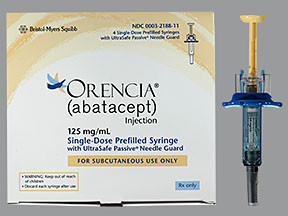
ORENCIA (abatacept) injection, 50 mg/0.4 mL, 87.5 mg/0.7 mL, and 125 mg/mL, is supplied as single-dose disposable prefilled glass syringes with BD UltraSafe Passive needle guard and flange extenders. The Type I glass syringe has a coated stopper and fixed stainless steel needle (5 bevel, 29-gauge thin wall, -inch needle) covered with a rigid needle shield. The prefilled syringe provides ORENCIA in the following packages: NDC 0003-2814-11 (50 mg/0.4 mL): pack of 4 syringes with a passive needle safety guard NDC 0003-2818-11 (87.5 mg/0.7 mL): pack of 4 syringes with a passive needle safety guard NDC 0003-2188-11 (125 mg/mL): pack of 4 syringes with a passive needle safety guard
ORENCIA (abatacept) ClickJect, 125 mg/mL, is supplied as a single-dose disposable prefilled autoinjector. The Type I glass syringe contained in the autoinjector has a coated stopper and fixed stainless steel needle (5 bevel, 27-gauge special thin wall, -inch needle) covered with a rigid needle shield. The autoinjector provides 125 mg of abatacept in 1 mL and is provided in the following package: NDC 0003-2188-51: pack of 4 autoinjectors
Storage Refrigerate ORENCIA lyophilized powder supplied in a vial at 2 C to 8 C (36 F to 46 F). Do not use beyond the expiration date on the vial. Protect the vials from light by storing in the original package until time of use. Refrigerate ORENCIA solution supplied in a prefilled syringe or ClickJect autoinjector at 2 C to 8 C (36 F to 46 F). Do not use beyond the expiration date on the prefilled syringe or autoinjector. Protect from light by storing in the original package until time of use. Do not allow the prefilled syringe or autoinjector to freeze.
Advise the patient to read the FDA-approved patient labeling (Patient Information and Instructions for Use).
PATIENT INFORMATION ORENCIA (oh-REN-see-ah) (abatacept) injection, for intravenous or subcutaneous use What is ORENCIA? ORENCIA is a prescription medicine that reduces signs and symptoms in: adults with moderate to severe rheumatoid arthritis (RA), including those who have not been helped enough by other medicines for RA. ORENCIA may prevent further damage to your bones and joints and may help your ability to perform daily activities. In adults, ORENCIA may be used alone or with other RA treatments other than tumor necrosis factor (TNF) antagonists. people 2 years of age and older with moderate to severe polyarticular juvenile idiopathic arthritis (pJIA). ORENCIA may be used alone or with methotrexate. people 2 years of age and older with active psoriatic arthritis (PsA). In adults, ORENCIA can be used alone or with other PsA treatments. In children, ORENCIA can be used alone or with methotrexate. ORENCIA is also used for the preventative treatment of acute graft versus host disease (aGVHD), in combination with a calcineurin inhibitor and methotrexate, in: people 2 years of age and older undergoing hematopoietic stem cell transplantation (HSCT) from a matched or 1 allele-mismatched unrelated-donor. It is not known if ORENCIA is safe and effective in children less than two years of age for the treatment of pJIA. It is not known if ORENCIA is safe and effective in children less than two years of age for the treatment of PsA. It is not known if ORENCIA is safe and effective in children less than two years of age for the preventative treatment of aGVHD. Before you receive or use ORENCIA, tell your healthcare provider about all of your medical conditions, including if you: have any kind of infection even if it is small (such as an open cut or sore), or an infection that is in your whole body (such as the flu). If you have an infection during treatment with ORENCIA, you may have a higher chance for getting serious side effects. have an infection that will not go away or an infection that keeps coming back. are allergic to abatacept or any of the ingredients in ORENCIA. See the end of this Patient Information leaflet for a complete list of ingredients in ORENCIA. have or have had inflammation of your liver due to an infection (viral hepatitis). Your healthcare provider may examine you for hepatitis before treatment with ORENCIA. have had a lung infection called tuberculosis (TB), a positive skin test for TB, or you recently have been in close contact with someone who has had TB. Your healthcare provider may examine you for TB or perform a skin test before treatment with ORENCIA. Symptoms of TB may include: oa cough that does not go away oweight loss ofever onight sweats have a history of Epstein-Barr Virus (EBV) or Cytomegalovirus (CMV) in people receiving ORENCIA for preventative treatment of aGVHD during HSCT from an unrelated donor. are scheduled to have surgery. recently received a vaccination or are scheduled for a vaccination. have a history of a breathing problem called chronic obstructive pulmonary disease (COPD). have diabetes and use a blood glucose monitor to check your blood sugar (blood glucose) levels. oORENCIA for intravenous infusion (given through a needle placed in a vein) contains maltose, a type of sugar, that can give false high blood sugar readings with certain types of blood glucose monitors on the day of ORENCIA infusion. Your healthcare provider may tell you to use a different way to monitor your blood sugar levels. oORENCIA for subcutaneous injection (injected under the skin) does not contain maltose. You do not need to change your blood sugar monitoring if you are using ORENCIA subcutaneously. are pregnant or plan to become pregnant. It is not known if ORENCIA can harm your unborn baby. If you took ORENCIA during pregnancy, talk to your healthcare provider before your baby receives any vaccines. are breastfeeding or plan to breastfeed. It is not known if ORENCIA passes into your breast milk. Talk to your healthcare provider about the best way to feed your baby if you use ORENCIA. Some people treated with ORENCIA have developed skin cancer. Tell your healthcare provider if you have a family or personal history of skin cancer, and if you see any growths or changes in the appearance of your skin during or after your treatment with ORENCIA. Tell your healthcare provider about all the medicines you take, including prescription and over-the-counter medicines, vitamins, and herbal supplements. ORENCIA may affect the way other medicines work, and other medicines may affect the way ORENCIA works causing serious side effects. Especially tell your healthcare provider if you take other biologic medicines that may affect your immune system, such as: Enbrel (etanercept) Humira (adalimumab) Remicade (infliximab) Kineret (anakinra) Rituxan (rituximab) Simponi (golimumab) Cimzia (certolizumab pegol) Actemra (tocilizumab) You may have a higher chance of getting a serious infection if you take ORENCIA with other biologic medicines that may affect your immune system. Know the medicines you take. Keep a list of them to show your healthcare provider and pharmacist when you get a new prescription. How will I receive or use ORENCIA? For treatment of RA, pJIA or PsA: You may receive ORENCIA given by a healthcare provider through a vein in your arm (intravenous infusion). It takes about 30 minutes to give you the full dose of medicine. You will then receive ORENCIA 2 weeks and 4 weeks after the first dose and then every 4 weeks. Intravenous administration of ORENCIA is not approved for pediatric patients with psoriatic arthritis. You may also receive ORENCIA as an injection under your skin (subcutaneous). For home use, ORENCIA comes in a prefilled syringe or prefilled ClickJect autoinjector. Your healthcare provider will prescribe the type that is best for you. If your healthcare provider decides that you or a caregiver can give your injections of ORENCIA prefilled syringes or ORENCIA ClickJect autoinjectors at home, you or your caregiver should receive training on the right way to prepare and inject ORENCIA. Do not try to inject ORENCIA until you have been shown the right way to give the injections by your healthcare provider. Your healthcare provider will tell you how much ORENCIA to use and when to use it. See the Instructions for Use at the end of this Patient Information leaflet for instructions about the right way to prepare and give your ORENCIA injections at home. For preventative treatment of aGVHD: You will receive ORENCIA by a healthcare provider through a vein in your arm (intravenous infusion) over 60 minutes on the day before transplantation (Day -1). You will then receive ORENCIA on Days 5, 14, and 28 after transplantation. Your healthcare provider may give you antiviral medicines before, during, and after your transplantation to help prevent Epstein-Barr Virus (EBV) and Cytomegalovirus (CMV) infections. What are the possible side effects of ORENCIA? ORENCIA may cause serious side effects, including: infections. ORENCIA can make you more likely to get infections or make the infection that you have get worse. Some people have died from these infections. Call your healthcare provider right away if you have any symptoms of an infection. Symptoms of an infection may include: ofever ofeel very tired ohave a cough ohave flu-like symptoms owarm, red, or painful skin allergic reactions. Allergic reactions can happen to people who are treated with ORENCIA. Call your healthcare provider or go to the emergency room right away if you have any symptoms of an allergic reaction. Symptoms of an allergic reaction may include: ohives oswollen face, eyelids, lips, or tongue otrouble breathing hepatitis B infection in people who carry the virus in their blood. If you are a carrier of the hepatitis B virus (a virus that affects the liver), the virus can become active during treatment with ORENCIA. Your healthcare provider may do a blood test before you start treatment with ORENCIA. vaccinations. You should not receive ORENCIA with certain types of vaccines (live vaccines). You can receive non-live vaccines, such as pneumococcal and inactivated influenza (flu) vaccines. ORENCIA may also cause some vaccinations to be less effective. Talk with your healthcare provider about your vaccination plans. breathing problems in people with Chronic Obstructive Pulmonary Disease (COPD). You may get certain respiratory problems more often if you receive ORENCIA and have COPD. Symptoms of respiratory problems include: oCOPD that becomes worse ocough otrouble breathing cancer (malignancies). Certain kinds of cancer have been reported in people using ORENCIA. It is not known if ORENCIA increases your chance of getting certain kinds of cancer. Cytomegalovirus (CMV) and Epstein-Barr Virus (EBV) infections. CMV and EBV infections and return of CMV and EBV (reactivation) have happened in people receiving ORENCIA for preventative treatment of aGVHD during unrelated HSCT. Your healthcare provider will monitor you for 6 months after transplantation and may treat you with medicines to help prevent CMV and EBV infection if needed. The most common side effects of ORENCIA in people with RA include: headache upper respiratory tract infection sore throat nausea In children and adolescents, other side effects may include: diarrhea cough fever abdominal pain The most common side effects of ORENCIA in prevention of aGVHD include: low red blood cell count high blood pressure CMV infection fever pneumonia nosebleed decreased CD4 lymphocytes increased levels of magnesium in the blood kidney problems These are not all the possible side effects of ORENCIA. Call your doctor for medical advice about side effects. You may report side effects to FDA at 1-800-FDA-1088. How should I store ORENCIA? Store ORENCIA in the refrigerator at 36 F to 46 F (2 C to 8 C). Keep ORENCIA in the original package and out of the light. Do not freeze ORENCIA. Safely throw away medicine that is out of date or no longer needed. Keep ORENCIA and all medicines out of the reach of children. General information about the safe and effective use of ORENCIA. Medicines are sometimes prescribed for purposes other than those listed in a Patient Information leaflet. Do not use ORENCIA for a condition for which it was not prescribed. Do not give ORENCIA to other people, even if they have the same symptoms that you have. It may harm them. You can ask your pharmacist or healthcare provider for information about ORENCIA that is written for health professionals. What are the ingredients in ORENCIA? Active ingredient: abatacept Intravenous inactive ingredients: maltose, monobasic sodium phosphate, sodium chloride for administration Subcutaneous inactive ingredients: sucrose, poloxamer 188, monobasic sodium phosphate monohydrate, dibasic sodium phosphate anhydrous, water for injection. Bristol-Myers Squibb CompanyPrinceton, NJ 08543 USA, U.S. License Number 1713 All other trademarks are property of their respective owners. For more information, go to www.ORENCIA.com or call 1-800-ORENCIA. This Patient Information has been approved by the U.S. Food and Drug Administration.Revised: 5/2024
ORENCIA ClickJect (oh-REN-see-ah) (abatacept) Prefilled autoinjector ORENCIA ClickJect (abatacept) injection Prefilled autoinjector 125 mg/mL, single-dose autoinjector, for subcutaneous use only Read these instructions before you use the ClickJect autoinjector and each time you get a refill. There may be new information. Before you use the autoinjector for the first time, make sure your healthcare provider shows you the right way to use it. Important: Keep the ClickJect autoinjector in the refrigerator until ready to use. Do not freeze. Before you begin: Get to know the ClickJect autoinjector The autoinjector automatically delivers the medicine. The transparent tip locks over the needle when the injection is complete and the autoinjector is removed from the skin. Do not remove the orange needle cover until you are ready to inject. Before use After use Gather supplies for your injection on a clean, flat surface (only the ClickJect autoinjector is included in the package): Alcohol swab ClickJect autoinjector Adhesive bandage Sharps disposal container Cotton ball or gauze Go to Step 1 Step 1: Prepare your autoinjector Let your ClickJect autoinjector warm up. Remove 1 autoinjector from the refrigerator and let it rest at room temperature for 30 minutes. Do not remove the autoinjector needle cover while allowing it to reach room temperature. Wash your hands well with soap and water. Examine the ClickJect autoinjector: Check expiration date printed on the label. Do not use if past the expiration date. Check the autoinjector for damage. Do not use if it is cracked or broken. Check the liquid through the viewing window. It should be clear and colorless to pale yellow. You may see a small air bubble. You do not need to remove it. Do not inject if the liquid is cloudy, discolored, or has particles in it. Go to Step 2 Step 2: Prepare for injection Choose your injection site in either the stomach (abdomen), front of the thighs, or outer area of upper arm (only if caregiver administered). Rotate injection site. Each week you can use the same area of your body but use a different injection site in that area. Do not inject into an area where the skin is tender, bruised, red, scaly, or hard. Do not give the injection in any areas with scars or stretch marks. Record the date, time, and site where you inject. Gently clean injection site: Wipe the injection site with an alcohol swab and let it air dry. Do not touch the injection site again before giving the injection. Do not fan or blow on the clean area. Pull orange needle cover straight off. Do not twist the needle cover. Do not recap the autoinjector. Throw away (discard) the needle cover in yourhousehold trash. Do not use the autoinjector if it is dropped after the needle cover is removed. Note: It is normal to see a drop of fluid leaving the needle. Go to Step 3 Step 3: Inject your dose Position the autoinjector so you can see the viewing window and it is at a 90 angle to the injection site. With your other hand, gently pinch the cleaned skin. Complete all steps to deliver your full dose of medicine: Push down on the skin to unlockthe autoinjector. Press button, hold for 15 seconds and watch the window. You will hear a click as the injection begins. To deliver the full dose of medicine, hold the autoinjector in place for 15 seconds and wait until the blue indicator stops moving in the window. Remove the ClickJect autoinjector from the injection site by lifting it straight up. After you remove it from your skin, the transparent tip will lock over the needle. Release the pinched skin. Go to Step 4 Step 4: After the injection Care of injection site: There may be a little bleeding at the injection site. You can press a cotton ball or gauze over the injection site. Do not rub the injection site. If needed, you may cover the injection site with an adhesive bandage. Throwing away (disposing of) used ClickJect autoinjectors: Put your used ClickJect autoinjector in a FDA-cleared sharps disposal container right away after use. Do not throw away (dispose of) loose needles and prefilled syringes in your household trash. If you do not have a FDA-cleared sharps disposal container, you may use a household container that is: omade of a heavy-duty plastic, ocan be closed with a tight-fitting, puncture-resistant lid, without sharps being able to come out, oupright and stable during use, oleak resistant, and oproperly labeled to warn of hazardous waste inside the container. When your sharps disposal container is almost full, you will need to follow your community guidelines for the right way to dispose of your sharps disposal container. There may be state or local laws about how you should throw away used needles and syringes. For more information about safe sharps disposal, and for specific information about sharps disposal in the state that you live in, go to the FDA s website at: http://www.fda.gov/safesharpsdisposal. Do not dispose of your used sharps disposal container in your household trash unless your community guidelines permit this. Do not recycle your used sharps disposal container. See Frequently Asked Questions for additional throwing away (disposal) information. If your injection is administered by a caregiver, this person must also handle the autoinjector carefully to prevent accidental needle stick injury and possibly spreading infection. Keep autoinjector and the sharps disposal container out of the reach of children. How to store ORENCIA ClickJect autoinjector Store ORENCIA in the refrigerator at 36 F to 46 F (2 C to 8 C). Keep ORENCIA in the original package and out of the light. Do not freeze ORENCIA. Safely throw away medicine that is out of date or no longer needed. Continued on next page Frequently Asked Questions Q. Why do I need to allow the autoinjector to warm up at room temperature for 30 minutes prior to injecting? A. This step is primarily for your comfort. If the medicine is cold, the injection may take longer than 15 seconds. Never try to speed the warming process in any way, like using the microwave or placing the autoinjector in warm water. Q. What if I accidentally remove the needle cover (orange cap) before I m ready to use the autoinjector? A. If you remove the cover before you are ready to use the autoinjector, be careful. Do not try to replace it. Use the autoinjector as soon as possible. While you prepare for the injection, carefully place the autoinjector on its side on a clean, flat surface. Be sure to keep the autoinjector away from children. Q. What if the autoinjector appears to be broken or damaged? A. Do not use the autoinjector. Contact your healthcare provider or pharmacist for further instructions. Q. What if the injection was not triggered? A. Before the injection can be triggered, the device must be unlocked. To unlock, firmly push the autoinjector down on the skin without touching the button. When the stop-point is felt, the device is unlocked and can be triggered by pushing the button. Q. I feel a little bit of burning or pain during injection. Is this normal? A. When giving an injection, you may feel a prick from the needle. Sometimes, the medicine can cause slight irritation near the injection site. If this occurs, the discomfort should be mild to moderate. If you experience any side effects, including pain, swelling, or discoloration near the injection site, contact your healthcare provider or pharmacist immediately. You are encouraged to report side effects of prescription drugs to the FDA. Visit www.fda.gov/medwatch or call 1-800-FDA-1088. Q. How do I know I received my full dose? A. Before lifting the autoinjector from the injection site, check to make sure that the blue indicator has stopped moving. Then, before throwing away (disposing of) the autoinjector, check the bottom of the transparent viewing window to make sure there is no liquid left inside. If the medicine has not been completely injected, consult your healthcare provider or pharmacist. Continued on next page Frequently Asked Questions Q. How should I throw away (dispose of) a used autoinjector? A. Place used autoinjector into an FDA-cleared sharps disposal container right away after use. If you do not have one, you may use a household container that is: omade of a heavy-duty plastic, ocan be closed with a tight-fitting, puncture-resistant lid, without sharps being able to come out, oupright and stable during use, leak-resistant, and properly labeled to warn of hazardous waste inside the container. When your sharps disposal container is almost full, you will need to follow your community guidelines for the right way to throw away (dispose of) your sharps disposal container. There may be state or local laws about how you should throw away used needles and Autoinjectors. For more information about safe sharps disposal, and for specific information about sharps disposal in the state that you live in, go to the FDA s website at: http://www.fda.gov/safesharpsdisposal. Do not recycle your used sharps disposal container. Q. How should I keep my autoinjector cool while traveling? A. Your healthcare provider or pharmacist may be familiar with special carrying cases for injectable medicines. Store in the refrigerator at 36 F to 46 F (2 C to 8 C). Do not freeze. Protect from light. Q. Can I take my autoinjector on board an aircraft? A. Generally, this is allowed. Be sure to pack your autoinjector in your carry-on, and do not put it in your checked luggage. You should carry it with you in your travel cooler at a temperature of 36 F to 46 F (2 C to 8 C) until you are ready to use it. Airport security procedures and airline policies change from time to time, so it s best to check with airport authorities and the airline for any special rules. Prior to flying, get a letter from your healthcare provider to explain that you are traveling with prescription medicine that uses a device with a needle; if you are carrying a sharps container in your carry-on baggage, notify the screener at the airport. Q. What if my autoinjector does not stay cool for an extended period of time? Is it dangerous to use? A. Contact 1-800-673-6242 for details. If you have questions or concerns about your autoinjector, please contact a healthcare provider or call our toll-free help line at 1-800-673-6242. Bristol-Myers Squibb CompanyPrinceton, NJ 08543 USA, U.S. License Number 1713 This Instructions for Use has been approved by the U.S. Food and Drug Administration. ORENCIA is a registered trademark and ClickJect is a trademark of Bristol-Myers Squibb Company. Revised 1/2024
See How Supplied section for a complete list of available packages of ORENCIA. Rx onlyNDC 0003-2187-13ORENCIA (abatacept)Lyophilized Powder for IV Infusion250 mg/vialONLY USE THE SILICONE-FREE DISPOSABLE SYRINGE INCLUDED IN THE PACKAGE FOR RECONSTITUTIONBristol-Myers Squibb CompanyPrinceton, New Jersey 08543 USAUS License No. 1713
Bristol-Myers SquibbNDC 0003-2814-114 Single-Dose Prefilled Syringes with BD UltraSafe Passive Needle GuardORENCIA (abatacept)Injection50 mg/0.4mLSingle-Dose Prefilled Syringe with BD UltraSafe Passive Needle GuardFOR SUBCUTANEOUS USE ONLYWARNING: Keep out of reach of childrenDiscard each syringe after useRx only
Bristol-Myers SquibbNDC 0003-2818-114 Single-Dose Prefilled Syringes with BD UltraSafe Passive Needle GuardORENCIA (abatacept)Injection87.5 mg/0.7mLSingle-Dose Prefilled Syringe with BD UltraSafe Passive Needle GuardFOR SUBCUTANEOUS USE ONLYWARNING: Keep out of reach of childrenDiscard each syringe after useRx only
Bristol-Myers SquibbNDC 0003-2188-114 Single-Dose Prefilled Syringes with BD UltraSafe Passive Needle GuardORENCIA (abatacept)Injection125 mg/mLSingle-Dose Prefilled Syringe with BD UltraSafe Passive Needle GuardFOR SUBCUTANEOUS USE ONLYWARNING: Keep out of reach of childrenDiscard each syringe after useRx only
Bristol-Myers SquibbNDC 0003-2188-514 Single-Dose Prefilled AutoinjectorsORENCIA ClickJect (abatacept)Injection125 mg/mLSingle-Dose AutoinjectorFOR SUBCUTANEOUS USE ONLYRefrigerate immediatelyWARNING: Keep out of reach of childrenDiscard each autoinjector after useOpen from this side Rx only