INVEGA SUSTENNA (paliperidone palmitate) is indicated for the treatment of: Schizophrenia in adults [see Clinical Studies (14.1)]. Schizoaffective disorder in adults as monotherapy and as an adjunct to mood stabilizers or antidepressants [see Clinical Studies (14.2)]. INVEGA SUSTENNA is an atypical antipsychotic indicated for Treatment of schizophrenia in adults. ( 1) Treatment of schizoaffective disorder in adults as monotherapy and as an adjunct to mood stabilizers or antidepressants.
💊How to take it
For intramuscular injection only. ( 2.1) Each injection must be administered only by a healthcare professional. ( 2.1) For deltoid injection, use 1-inch 23G needle for patients weighing less than 90 kg or 1 -inch 22G needle for patients weighing 90 kg or more. For gluteal injection, use 1 -inch 22G needle regardless of patient weight. ( 2.1) Indication Initiation Dosing (deltoid) Monthly Maintenance Dose Administered 5 weeks after the first injection.
ℹ️Common side effects
In placebo-controlled trials with risperidone, aripiprazole, and olanzapine in elderly subjects with dementia, there was a higher incidence of cerebrovascular adverse reactions (cerebrovascular accidents and transient ischemic attacks) including fatalities compared to placebo-treated subjects. No studies have been conducted with oral paliperidone, INVEGA SUSTENNA, or the 3-month paliperidone palmitate extended-release injectable suspension in elderly patients with dementia.
⚠️Serious risks
Elderly patients with dementia-related psychosis treated with antipsychotic drugs are at an increased risk of death. INVEGA SUSTENNA is not approved for use in patients with dementia-related psychosis. [see Warnings and Precautions (5.1)] . WARNING: INCREASED MORTALITY IN ELDERLY PATIENTS WITH DEMENTIA-RELATED PSYCHOSIS See full prescribing information for complete boxed warning. Elderly patients with dementia-related psychosis treated with antipsychotic drugs are at an increased risk of death.
📋Interactions & cautions
Drugs that may cause orthostatic hypotension:An additive effect may occur when co-administered with INVEGA SUSTENNA. ( 7.1) Strong CYP3A4/P-glycoprotein (P-gp) inducers: Avoid using a strong inducer of CYP3A4 and/or P-gp (e.g., carbamazepine, rifampin, St John's Wort) during a dosing interval for INVEGA SUSTENNA. If administering a strong inducer is necessary, consider managing the patient using paliperidone extended-release tablets.
📦Storage & missed dose
INVEGA SUSTENNA is available as a white to off-white sterile aqueous extended-release suspension for intramuscular injection in dose strengths of 39 mg/0.25 mL, 78 mg/0.5 mL, 117 mg/0.75 mL, 156 mg/mL, and 234 mg/1.5 mL paliperidone palmitate in single-dose prefilled syringes. The single-use kit contains a prefilled syringe and 2 safety needles (a 1 -inch 22 gauge safety needle and a 1-inch 23 gauge safety needle).
Questions answered from this medication guide. Sign in to personalize with your meds & labs.
Paliperidone palmitate (Invega sustenna) Prices
Current MedMind pricing — no insurance required
Dosage and Administration ( 2.7) 9/2024
INVEGA SUSTENNA (paliperidone palmitate) is indicated for the treatment of: Schizophrenia in adults [see Clinical Studies (14.1)]. Schizoaffective disorder in adults as monotherapy and as an adjunct to mood stabilizers or antidepressants [see Clinical Studies (14.2)]. INVEGA SUSTENNA is an atypical antipsychotic indicated for Treatment of schizophrenia in adults. ( 1) Treatment of schizoaffective disorder in adults as monotherapy and as an adjunct to mood stabilizers or antidepressants. ( 1)
For intramuscular injection only. ( 2.1) Each injection must be administered only by a healthcare professional. ( 2.1) For deltoid injection, use 1-inch 23G needle for patients weighing less than 90 kg or 1 -inch 22G needle for patients weighing 90 kg or more. For gluteal injection, use 1 -inch 22G needle regardless of patient weight. ( 2.1) Indication Initiation Dosing (deltoid) Monthly Maintenance Dose Administered 5 weeks after the first injection. (deltoid or gluteal) Maximum Monthly Dose Day 1 Day 8 Schizophrenia ( 2.2) 234 mg 156 mg 39 234 mg The recommended maintenance dose for treatment of schizophrenia is 117 mg. Some patients may benefit from lower or higher maintenance doses within the additional available strengths (39 mg, 78 mg, 156 mg, and 234 mg). 234 mg Schizoaffective disorder ( 2.2) 234 mg 156 mg 78 234 mg Adjust dose based on tolerability and/or efficacy using available strengths. The 39 mg strength was not studied in the long-term schizoaffective disorder study. 234 mg For patients na ve to oral paliperidone or oral or injectable risperidone, establish tolerability with oral paliperidone or oral risperidone prior to initiating treatment with INVEGA SUSTENNA. ( 2.2) Missed Doses: To manage either a missed second initiation dose or a missed monthly maintenance dose, refer to the Full Prescribing Information. ( 2.3) Moderate to severe renal impairment (creatinine clearance < 50 mL/min):INVEGA SUSTENNA is not recommended. ( 2.5) Mild renal impairment (creatinine clearance 50 mL/min to < 80 mL/min):Administer 156 mg on treatment Day 1 and 117 mg on Day 8, both in the deltoid muscle. Follow with the recommended monthly maintenance dose of 78 mg, administered in the deltoid or gluteal muscle. Adjust monthly maintenance dose based on tolerability and/or efficacy within the strengths of 39 mg, 78 mg, 117 mg, or 156 mg. The maximum monthly dose is 156 mg for patients with mild renal impairment. ( 2.5)
Each injection must be administered only by a healthcare professional. Parenteral drug products should be inspected visually for foreign matter and discoloration prior to administration, whenever product and container permit. INVEGA SUSTENNA is intended for intramuscular use only. Do not administer by any other route. Avoid inadvertent injection into a blood vessel. Administer the dose in a single injection; do not administer the dose in divided injections. Inject slowly, deep into the deltoid or gluteal muscle. INVEGA SUSTENNA must be administered using only the needles that are provided in the INVEGA SUSTENNA kit. The recommended needle size for administration of INVEGA SUSTENNA into the deltoid muscle is determined by the patient's weight: For patients weighing less than 90 kg, the 1-inch, 23 gauge needle is recommended. For patients weighing 90 kg or more, the 1 -inch, 22 gauge needle is recommended. Deltoid injections should be alternated between the two deltoid muscles. The recommended needle size for administration of INVEGA SUSTENNA into the gluteal muscle is the 1 -inch, 22 gauge needle regardless of patient weight. Administer into the upper-outer quadrant of the gluteal muscle. Gluteal injections should be alternated between the two gluteal muscles.
For patients who have never taken oral paliperidone or oral or injectable risperidone, it is recommended to establish tolerability with oral paliperidone or oral risperidone prior to initiating treatment with INVEGA SUSTENNA. The recommended dosing of INVEGA SUSTENNA for each approved indication is displayed in Table 1. The recommended initiation of INVEGA SUSTENNA is with a dose of 234 mg on treatment day 1 and 156 mg one week later, both administered in the deltoid muscle. Following the second initiation dose, monthly maintenance doses can be administered in either the deltoid or gluteal muscle. Table 1: Recommended Dosing of INVEGA SUSTENNA for Adults with Schizophrenia or Schizoaffective Disorder Indication Initiation Dosing (deltoid) Monthly Maintenance Dose Administered 5 weeks after the first injection. (deltoid or gluteal) Maximum Monthly Dose Day 1 Day 8 Schizophrenia 234 mg 156 mg 39 234 mg The recommended maintenance dose for treatment of schizophrenia is 117 mg. Some patients may benefit from lower or higher maintenance doses within the additional available strengths (39 mg, 78 mg, 156 mg, and 234 mg). 234 mg Schizoaffective disorder 234 mg 156 mg 78 234 mg Adjust dose based on tolerability and/or efficacy using available strengths. The 39 mg strength was not studied in the long-term schizoaffective disorder study. 234 mg Adjustment of the maintenance dose may be made monthly. When making dose adjustments, the prolonged-release characteristics of INVEGA SUSTENNA should be considered [see Clinical Pharmacology (12.3)] , as the full effect of the dose adjustment may not be evident for several months.
INVEGA SUSTENNA (paliperidone palmitate) Extended-Release Injectable Suspension Product of Ireland Manufactured by: Janssen Pharmaceutica NV Beerse, Belgium Manufactured for: Janssen Pharmaceuticals, Inc. Titusville, NJ 08560, USA For patent information: www.janssenpatents.com 2009 Janssen Pharmaceutical Companies
Since paliperidone is the major active metabolite of risperidone, caution should be exercised when INVEGA SUSTENNA is coadministered with risperidone or with oral paliperidone for extended periods of time. Safety data involving concomitant use of INVEGA SUSTENNA with other antipsychotics is limited.
There are no systematically collected data to specifically address switching patients with schizophrenia or schizoaffective disorder from other antipsychotics to INVEGA SUSTENNA, or concerning concomitant administration with other antipsychotics.
Each injection must be administered only by a healthcare professional. The kit contains a prefilled syringe and 2 safety needles (a 1 -inch 22 gauge needle and a 1-inch 23 gauge needle) for intramuscular injection. INVEGA SUSTENNA is for single use only. Shake the syringe vigorously for a minimum of 10 seconds to ensure a homogeneous suspension. Select the appropriate needle. For DELTOID injection: If the patient weighs less than 90 kg, use the 1-inch 23gauge needle (needle with bluecolored hub). If the patient weighs 90 kg or more, use the 1 -inch 22gauge needle (needle with graycolored hub). For GLUTEAL injection: Use the 1 -inch 22gauge needle (needle with graycolored hub) regardless of patient's weight. Hold the syringe with the tip cap pointing up. Remove the rubber tip cap with a gentle twisting motion. Peel the safety needle pouch half way open. Grasp the needle sheath using the plastic peel pouch. Hold the syringe pointing up. Attach the safety needle to the syringe using a gentle twisting motion to avoid needle hub cracks or damage. Always check for signs of damage or leaking prior to administration. Pull the needle sheath away from the needle with a straight pull. Do not twist the sheath as the needle may be loosened from the syringe. Bring the syringe with the attached needle in upright position to de-aerate. De-aerate the syringe by moving the plunger rod carefully forward. Inject the entire contents intramuscularly slowly, deep into the selected deltoid or gluteal muscle of the patient. Do not administer by any other route. After the injection is complete, use either thumb or finger of one hand (h1, h2) or a flat surface (h3) to activate the needle protection system. The needle protection system is fully activated when a 'click' is heard. Discard the syringe with needle appropriately. h1 h2 h3
INVEGA SUSTENNA is available as a white to off-white aqueous extended-release injectable suspension for intramuscular injection in dose strengths of 39 mg/0.25 mL, 78 mg/0.5 mL, 117 mg/0.75 mL, 156 mg/mL, and 234 mg/1.5 mL paliperidone palmitate in single-dose prefilled syringes. Extended-release injectable suspension: 39 mg/0.25 mL, 78 mg/0.5 mL, 117 mg/0.75 mL, 156 mg/mL, or 234 mg/1.5 mL ( 3)
INVEGA SUSTENNA is contraindicated in patients with a known hypersensitivity to either paliperidone or risperidone, or to any of the excipients in the INVEGA SUSTENNA formulation. Hypersensitivity reactions, including anaphylactic reactions and angioedema, have been reported in patients treated with risperidone and in patients treated with paliperidone. Paliperidone palmitate is converted to paliperidone, which is a metabolite of risperidone. Known hypersensitivity to paliperidone, risperidone, or to any excipients in INVEGA SUSTENNA. ( 4)
Cerebrovascular Adverse Reactions, Including Stroke, in Elderly Patients with Dementia-Related Psychosis:Increased incidence of cerebrovascular adverse reactions (e.g. stroke, transient ischemic attack). ( 5.2) Neuroleptic Malignant Syndrome:Manage with immediate discontinuation of drug and close monitoring. ( 5.3) QT Prolongation:Avoid use with drugs that also increase QT interval and in patients with risk factors for prolonged QT interval. ( 5.4) Tardive Dyskinesia:Discontinue drug if clinically appropriate. ( 5.5) Metabolic Changes:Monitor for hyperglycemia/diabetes mellitus, dyslipidemia and weight gain. ( 5.6) Orthostatic Hypotension and Syncope:Monitor heart rate and blood pressure and warn patients with known cardiovascular or cerebrovascular disease, and risk of dehydration or syncope. ( 5.7) Leukopenia, Neutropenia, and Agranulocytosis:Perform complete blood counts (CBC) in patients with pre-existing low white blood cell count (WBC) or history of leukopenia or neutropenia. Consider discontinuing INVEGA SUSTENNA if clinically significant decline in WBC in the absence of other causative factors. ( 5.9) Hyperprolactinemia:Prolactin elevations occur and persist during chronic administration. ( 5.10) Potential for Cognitive and Motor Impairment:Use caution when operating machinery. ( 5.11) Seizures:Use cautiously in patients with a history of seizures or with conditions that lower the seizure threshold. ( 5.12)
Elderly patients with dementia-related psychosis treated with antipsychotic drugs are at an increased risk of death. Analyses of 17 placebo-controlled trials (modal duration of 10 weeks), largely in patients taking atypical antipsychotic drugs, revealed a risk of death in drug-treated patients of between 1.6 to 1.7 times the risk of death in placebo-treated patients. Over the course of a typical 10-week controlled trial, the rate of death in drug-treated patients was about 4.5%, compared to a rate of about 2.6% in the placebo group. Although the causes of death were varied, most of the deaths appeared to be either cardiovascular (e.g., heart failure, sudden death) or infectious (e.g., pneumonia) in nature. Observational studies suggest that, similar to atypical antipsychotic drugs, treatment with conventional antipsychotic drugs may increase mortality. The extent to which the findings of increased mortality in observational studies may be attributed to the antipsychotic drug as opposed to some characteristic(s) of the patients is not clear. INVEGA SUSTENNA is not approved for the treatment of patients with dementia-related psychosis [see Boxed Warningand Warnings and Precautions (5.2)] .
In placebo-controlled trials with risperidone, aripiprazole, and olanzapine in elderly subjects with dementia, there was a higher incidence of cerebrovascular adverse reactions (cerebrovascular accidents and transient ischemic attacks) including fatalities compared to placebo-treated subjects. No studies have been conducted with oral paliperidone, INVEGA SUSTENNA, or the 3-month paliperidone palmitate extended-release injectable suspension in elderly patients with dementia. These medicines are not approved for the treatment of patients with dementia-related psychosis [see Boxed Warningand Warnings and Precautions (5.1)] .
Neuroleptic Malignant Syndrome (NMS), a potentially fatal symptom complex, has been reported in association with antipsychotic drugs, including paliperidone. Clinical manifestations of NMS are hyperpyrexia, muscle rigidity, altered mental status including delirium, and autonomic instability (irregular pulse or blood pressure, tachycardia, diaphoresis, and cardiac dysrhythmia). Additional signs may include elevated creatine phosphokinase, myoglobinuria (rhabdomyolysis), and acute renal failure. If NMS is suspected, immediately discontinue INVEGA SUSTENNA and provide symptomatic treatment and monitoring.
Paliperidone causes a modest increase in the corrected QT (QTc) interval. The use of paliperidone should be avoided in combination with other drugs that are known to prolong QTc including Class 1A (e.g., quinidine, procainamide) or Class III (e.g., amiodarone, sotalol) antiarrhythmic medications, antipsychotic medications (e.g., chlorpromazine, thioridazine), antibiotics (e.g., gatifloxacin, moxifloxacin), or any other class of medications known to prolong the QTc interval. Paliperidone should also be avoided in patients with congenital long QT syndrome and in patients with a history of cardiac arrhythmias. Certain circumstances may increase the risk of the occurrence of Torsades de pointes and/or sudden death in association with the use of drugs that prolong the QTc interval, including (1) bradycardia; (2) hypokalemia or hypomagnesemia; (3) concomitant use of other drugs that prolong the QTc interval; and (4) presence of congenital prolongation of the QT interval. The effects of oral paliperidone on the QT interval were evaluated in a double-blind, active-controlled (moxifloxacin 400 mg single dose), multicenter QT study in adults with schizophrenia and schizoaffective disorder, and in three placebo- and active-controlled 6-week, fixed-dose efficacy trials in adults with schizophrenia. In the QT study (n=141), the 8 mg dose of immediate-release oral paliperidone (n=50) showed a mean placebo-subtracted increase from baseline in QTcLD of 12.3 msec (90% CI: 8.9; 15.6) on day 8 at 1.5 hours post-dose. The mean steady-state peak plasma concentration for this 8 mg dose of paliperidone immediate release (C max ss= 113 ng/mL) was more than 2-fold the exposure observed with the maximum recommended 234 mg dose of INVEGA SUSTENNA administered in the deltoid muscle (predicted median C max ss= 50 ng/mL). In this same study, a 4 mg dose of the immediate-release oral formulation of paliperidone, for which C max ss= 35 ng/mL, showed an increased placebo-subtracted QTcLD of 6.8 msec (90% CI: 3.6; 10.1) on day 2 at 1.5 hours post-dose. In the three fixed-dose efficacy studies of oral paliperidone extended release in subjects with schizophrenia, electrocardiogram (ECG) measurements taken at various time points showed only one subject in the oral paliperidone 12 mg group had a change exceeding 60 msec at one time-point on Day 6 (increase of 62 msec). In the four fixed-dose efficacy studies of INVEGA SUSTENNA in subjects with schizophrenia and in the long-term study in subjects with schizoaffective disorder, no subject experienced a change in QTcLD exceeding 60 msec and no subject had a QTcLD value of > 500 msec at any time point. In the maintenance study in subjects with schizophrenia, no subject had a QTcLD change > 60 msec, and one subject had a QTcLD value of 507 msec (Bazett's QT corrected interval [QTcB] value of 483 msec); this latter subject also had a heart rate of 45 beats per minute.
Tardive dyskinesia, a syndrome consisting of potentially irreversible, involuntary, dyskinetic movements, may develop in patients treated with antipsychotic drugs. Although the prevalence of the syndrome appears to be highest among the elderly, especially elderly women, it is impossible to predict which patients will develop the syndrome. Whether antipsychotic drug products differ in their potential to cause tardive dyskinesia is unknown. The risk of developing tardive dyskinesia and the likelihood that it will become irreversible appear to increase with the duration of treatment and the cumulative dose. The syndrome can develop after relatively brief treatment periods, even at low doses. It may also occur after discontinuation of treatment. Tardive dyskinesia may remit, partially or completely, if antipsychotic treatment is discontinued. Antipsychotic treatment, itself, however, may suppress (or partially suppress) the signs and symptoms of the syndrome, possibly masking the underlying process. The effect that symptomatic suppression has upon the long-term course of the syndrome is unknown. Given these considerations, INVEGA SUSTENNA should be prescribed in a manner that is most likely to minimize the occurrence of tardive dyskinesia. Chronic antipsychotic treatment should generally be reserved for patients: (1) who suffer from a chronic illness that is known to respond to antipsychotic drugs, and (2) for whom alternative, equally effective, but potentially less harmful treatments are not available or appropriate. In patients who do require chronic treatment, use the lowest dose and the shortest duration of treatment producing a satisfactory clinical response. Periodically reassess the need for continued treatment. If signs and symptoms of tardive dyskinesia appear in a patient on INVEGA SUSTENNA, drug discontinuation should be considered. However, some patients may require treatment with INVEGA SUSTENNA despite the presence of the syndrome.
Atypical antipsychotic drugs have been associated with metabolic changes that may increase cardiovascular/cerebrovascular risk. These metabolic changes include hyperglycemia, dyslipidemia, and body weight gain. While all of the drugs in the class have been shown to produce some metabolic changes, each drug has its own specific risk profile.
Paliperidone can induce orthostatic hypotension and syncope in some patients because of its alpha-adrenergic blocking activity. Syncope was reported in < 1% (4/1293) of subjects treated with INVEGA SUSTENNA in the recommended dose range of 39 mg to 234 mg in the four fixed-dose, double-blind, placebo-controlled trials compared with 0% (0/510) of subjects treated with placebo. In the four fixed-dose efficacy studies in subjects with schizophrenia, orthostatic hypotension was reported as an adverse event by < 1% (2/1293) of INVEGA SUSTENNA-treated subjects compared to 0% (0/510) with placebo. Incidences of orthostatic hypotension and syncope in the long-term studies in subjects with schizophrenia and schizoaffective disorder were similar to those observed in the short-term studies. INVEGA SUSTENNA should be used with caution in patients with known cardiovascular disease (e.g., heart failure, history of myocardial infarction or ischemia, conduction abnormalities), cerebrovascular disease, or conditions that predispose the patient to hypotension (e.g., dehydration, hypovolemia, and treatment with antihypertensive medications). Monitoring of orthostatic vital signs should be considered in patients who are vulnerable to hypotension.
Somnolence, postural hypotension, motor and sensory instability have been reported with the use of antipsychotics, including INVEGA SUSTENNA, which may lead to falls and, consequently, fractures or other fall-related injuries. For patients, particularly the elderly, with diseases, conditions, or medications that could exacerbate these effects, assess the risk of falls when initiating antipsychotic treatment and recurrently for patients on long-term antipsychotic therapy.
In clinical trial and/or postmarketing experience, events of leukopenia and neutropenia have been reported temporally related to antipsychotic agents, including INVEGA SUSTENNA. Agranulocytosis has also been reported. Possible risk factors for leukopenia/neutropenia include pre-existing low white blood cell count (WBC)/absolute neutrophil count (ANC) and history of drug-induced leukopenia/neutropenia. In patients with a history of a clinically significant low WBC/ANC or a drug-induced leukopenia/neutropenia, perform a complete blood count (CBC) frequently during the first few months of therapy. In such patients, consider discontinuation of INVEGA SUSTENNA at the first sign of a clinically significant decline in WBC in the absence of other causative factors. Monitor patients with clinically significant neutropenia for fever or other symptoms or signs of infection and treat promptly if such symptoms or signs occur. Discontinue INVEGA SUSTENNA in patients with severe neutropenia (absolute neutrophil count < 1000/mm 3) and follow their WBC until recovery.
Like other drugs that antagonize dopamine D 2receptors, paliperidone elevates prolactin levels and the elevation persists during chronic administration. Paliperidone has a prolactin-elevating effect similar to that seen with risperidone, a drug that is associated with higher levels of prolactin than other antipsychotic drugs. Hyperprolactinemia, regardless of etiology, may suppress hypothalamic GnRH, resulting in reduced pituitary gonadotrophin secretion. This, in turn, may inhibit reproductive function by impairing gonadal steroidogenesis in both female and male patients. Galactorrhea, amenorrhea, gynecomastia, and impotence have been reported in patients receiving prolactin-elevating compounds. Long-standing hyperprolactinemia when associated with hypogonadism may lead to decreased bone density in both female and male subjects. Tissue culture experiments indicate that approximately one-third of human breast cancers are prolactin dependent in vitro, a factor of potential importance if the prescription of these drugs is considered in a patient with previously detected breast cancer. An increase in the incidence of pituitary gland, mammary gland, and pancreatic islet cell neoplasia (mammary adenocarcinomas, pituitary and pancreatic adenomas) was observed in the risperidone carcinogenicity studies conducted in mice and rats [see Nonclinical Toxicology (13.1)] . Neither clinical studies nor epidemiologic studies conducted to date have shown an association between chronic administration of this class of drugs and tumorigenesis in humans, but the available evidence is too limited to be conclusive. Prolactin data from two long-term, double-blind, placebo-controlled studies with INVEGA SUSTENNA are presented below; one study was in a population of patients with schizophrenia; the second study was in patients with schizoaffective disorder.
Somnolence, sedation, and dizziness were reported as adverse reactions in subjects treated with INVEGA SUSTENNA [see Adverse Reactions (6.1)] . Antipsychotics, including INVEGA SUSTENNA, have the potential to impair judgment, thinking, or motor skills. Patients should be cautioned about performing activities requiring mental alertness, such as operating hazardous machinery or operating a motor vehicle, until they are reasonably certain that paliperidone therapy does not adversely affect them.
In the four fixed-dose double-blind placebo-controlled studies in subjects with schizophrenia, <1% (1/1293) of subjects treated with INVEGA SUSTENNA in the recommended dose range of 39 mg to 234 mg experienced an adverse event of convulsion compared with <1% (1/510) of placebo-treated subjects who experienced an adverse event of grand mal convulsion. Like other antipsychotic drugs, INVEGA SUSTENNA should be used cautiously in patients with a history of seizures or other conditions that potentially lower the seizure threshold. Conditions that lower the seizure threshold may be more prevalent in patients 65 years or older.
Esophageal dysmotility and aspiration have been associated with antipsychotic drug use. INVEGA SUSTENNA and other antipsychotic drugs should be used cautiously in patients at risk for aspiration pneumonia.
Drugs with alpha-adrenergic blocking effects have been reported to induce priapism. Although no cases of priapism have been reported in clinical trials with INVEGA SUSTENNA, priapism has been reported with oral paliperidone during postmarketing surveillance. Severe priapism may require surgical intervention.
Disruption of the body's ability to reduce core body temperature has been attributed to antipsychotic agents. Appropriate care is advised when prescribing INVEGA SUSTENNA to patients who will be experiencing conditions which may contribute to an elevation in core body temperature, e.g., exercising strenuously, exposure to extreme heat, receiving concomitant medication with anticholinergic activity, or being subject to dehydration.
The following are discussed in more detail in other sections of the labeling: Increased mortality in elderly patients with dementia-related psychosis [see Boxed Warningand Warnings and Precautions (5.1)] Cerebrovascular adverse reactions, including stroke, in elderly patients with dementia-related psychosis [see Warnings and Precautions (5.2)] Neuroleptic malignant syndrome [see Warnings and Precautions (5.3)] QT prolongation [see Warnings and Precautions (5.4)] Tardive dyskinesia [see Warnings and Precautions (5.5)] Metabolic changes [see Warnings and Precautions (5.6)] Orthostatic hypotension and syncope [see Warnings and Precautions (5.7)] Falls [see Warnings and Precautions (5.8)] Leukopenia, neutropenia, and agranulocytosis [see Warnings and Precautions (5.9)] Hyperprolactinemia [see Warnings and Precautions (5.10)] Potential for cognitive and motor impairment [see Warnings and Precautions (5.11)] Seizures [see Warnings and Precautions (5.12)] Dysphagia [see Warnings and Precautions (5.13)] Priapism [see Warnings and Precautions (5.14)] Disruption of body temperature regulation [see Warnings and Precautions (5.15)] The most common adverse reactions (incidence 5% and occurring at least twice as often as placebo) were injection site reactions, somnolence/sedation, dizziness, akathisia, and extrapyramidal disorder. ( 6) To report SUSPECTED ADVERSE REACTIONS, contact Janssen Pharmaceuticals, Inc. at 1-800-JANSSEN (1-800-526-7736) or FDA at 1-800-FDA-1088 or www.fda.gov/medwatch
Because clinical trials are conducted under widely varying conditions, adverse reaction rates observed in the clinical trials of a drug cannot be directly compared to rates in the clinical trials of another drug and may not reflect the rates observed in clinical practice.
The following adverse reactions have been identified during postapproval use of paliperidone; because these reactions were reported voluntarily from a population of uncertain size, it is not always possible to reliably estimate their frequency or establish a causal relationship to drug exposure: angioedema, catatonia, ileus, somnambulism, swollen tongue, thrombotic thrombocytopenic purpura, urinary incontinence, and urinary retention. Cases of anaphylactic reaction after injection with INVEGA SUSTENNA have been reported during postmarketing experience in patients who have previously tolerated oral risperidone or oral paliperidone. Paliperidone is the major active metabolite of risperidone. Adverse reactions reported with oral risperidone and risperidone long-acting injection can be found in the Adverse Reactions (6)sections of the package inserts for those products.
Drugs that may cause orthostatic hypotension:An additive effect may occur when co-administered with INVEGA SUSTENNA. ( 7.1) Strong CYP3A4/P-glycoprotein (P-gp) inducers: Avoid using a strong inducer of CYP3A4 and/or P-gp (e.g., carbamazepine, rifampin, St John's Wort) during a dosing interval for INVEGA SUSTENNA. If administering a strong inducer is necessary, consider managing the patient using paliperidone extended-release tablets. ( 2.5, 7.1, 12.3)
Because paliperidone palmitate is hydrolyzed to paliperidone [see Clinical Pharmacology (12.3)] , results from studies with oral paliperidone should be taken into consideration when assessing drug-drug interaction potential. Table 13. Clinically Important Drug Interactions with INVEGA SUSTENNA Concomitant Drug Name or Drug Class Clinical Rationale Clinical Recommendation Centrally Acting Drugs and Alcohol Given the primary CNS effects of paliperidone, concomitant use of centrally acting drugs and alcohol may modulate the CNS effects of INVEGA SUSTENNA. INVEGA SUSTENNA should be used with caution in combination with other centrally acting drugs and alcohol [see Adverse Reactions (6.1, 6.2)] . Drugs with Potential for Inducing Orthostatic Hypotension Because INVEGA SUSTENNA has the potential for inducing orthostatic hypotension, an additive effect may occur when INVEGA SUSTENNA is administered with other therapeutic agents that have this potential [see Warnings and Precautions (5.7)] . Monitor orthostatic vital signs in patients who are vulnerable to hypotension [see Warnings and Precautions (5.7)] . Strong Inducers of CYP3A4 and P-gp (e.g., carbamazepine, rifampin, or St. John's Wort) The concomitant use of paliperidone and strong inducers of CYP3A4 and P-gp may decrease the exposure of paliperidone [see Clinical Pharmacology (12.3)] . Avoid using CYP3A4 and/or P-gp inducers with INVEGA SUSTENNA during the 1-month dosing interval, if possible. If administering a strong inducer is necessary, consider managing the patient using paliperidone extended-release tablets [see Dosage and Administration (2.5)] . Levodopa and Other Dopamine Agonists Paliperidone may antagonize the effect of levodopa and other dopamine agonists. Monitor and manage patient as clinically appropriate.
Clinically meaningful pharmacokinetic interaction between INVEGA SUSTENNA and valproate (including valproic acid and divalproex sodium) is not expected. Based on pharmacokinetic studies with oral paliperidone, no dosage adjustment of INVEGA SUSTENNA is required when administered with valproate [see Clinical Pharmacology (12.3)]. Additionally, no dosage adjustment is necessary for valproate when co-administered with INVEGA SUSTENNA [See Clinical Pharmacology (12.3)]. Pharmacokinetic interaction between lithium and INVEGA SUSTENNA is also unlikely. Paliperidone is not expected to cause clinically important pharmacokinetic interactions with drugs that are metabolized by cytochrome P450 isozymes. In vitrostudies indicate that CYP2D6 and CYP3A4 may be involved in paliperidone metabolism; however, there is no evidence in vivothat inhibitors of these enzymes significantly affect the metabolism of paliperidone. Paliperidone is not a substrate of CYP1A2, CYP2A6, CYP2C9, and CYP2C19; an interaction with inhibitors or inducers of these isozymes is unlikely. [see Clinical Pharmacology (12.3)]
Pregnancy:May cause extrapyramidal and/or withdrawal symptoms in neonates with third trimester exposure. ( 8.1)
Safety and effectiveness of INVEGA SUSTENNA in patients < 18 years of age have not been established.
Clinical studies of INVEGA SUSTENNA did not include sufficient numbers of subjects aged 65 and over to determine whether they respond differently from younger subjects. Other reported clinical experience has not identified differences in responses between the elderly and younger patients. This drug is known to be substantially excreted by the kidney and clearance is decreased in patients with renal impairment [see Clinical Pharmacology (12.3)] , who should be given reduced doses. Because elderly patients are more likely to have decreased renal function, adjust dose based on renal function [see Dosage and Administration (2.5)].
Use of INVEGA SUSTENNA is not recommended in patients with moderate or severe renal impairment (creatinine clearance < 50 mL/min). Dose reduction is recommended for patients with mild renal impairment (creatinine clearance 50 mL/min to < 80 mL/min) [see Dosage and Administration (2.5)and Clinical Pharmacology (12.3)] .
INVEGA SUSTENNA has not been studied in patients with hepatic impairment. Based on a study with oral paliperidone, no dose adjustment is required in patients with mild or moderate hepatic impairment. Paliperidone has not been studied in patients with severe hepatic impairment [see Clinical Pharmacology (12.3)] .
Patients with Parkinson's Disease or Dementia with Lewy Bodies can experience increased sensitivity to INVEGA SUSTENNA. Manifestations can include confusion, obtundation, postural instability with frequent falls, extrapyramidal symptoms, and clinical features consistent with neuroleptic malignant syndrome.
INVEGA SUSTENNA (paliperidone) is not a controlled substance.
Paliperidone has not been systematically studied in animals or humans for its potential for abuse.
Paliperidone has not been systematically studied in animals or humans for its potential for tolerance or physical dependence.
No cases of overdose were reported in premarketing studies with INVEGA SUSTENNA. Because INVEGA SUSTENNA is to be administered by healthcare professionals, the potential for overdosage by patients is low. While experience with paliperidone overdose is limited, among the few cases of overdose reported in premarketing trials with oral paliperidone, the highest estimated ingestion was 405 mg. Observed signs and symptoms included extrapyramidal symptoms and gait unsteadiness. Other potential signs and symptoms include those resulting from an exaggeration of paliperidone's known pharmacological effects, i.e., drowsiness and sedation, tachycardia and hypotension, and QT prolongation. Torsades de pointes and ventricular fibrillation have been reported in a patient in the setting of overdose with oral paliperidone. Paliperidone is the major active metabolite of risperidone. Overdose experience reported with risperidone can be found in the OVERDOSAGEsection of the risperidone package insert.
Contact a Certified Poison Control Center for the most up to date information on the management of INVEGA SUSTENNA overdosage (1-800-222-1222 or www.poison.org). Provide supportive care, including close medical supervision and monitoring. Treatment should consist of general measures employed in the management of overdosage with any drug. Consider the possibility of multiple drug overdosage. Ensure an adequate airway, oxygenation, and ventilation. Monitor cardiac rhythm and vital signs. Use supportive and symptomatic measures. There is no specific antidote to paliperidone. Consider the prolonged-release characteristics of INVEGA SUSTENNA and the long apparent half-life of paliperidone when assessing treatment needs and recovery.
INVEGA SUSTENNA contains paliperidone palmitate. The active ingredient, paliperidone, is an atypical antipsychotic belonging to the chemical class of benzisoxazole derivatives. INVEGA SUSTENNA contains a racemic mixture of (+)- and (-)- paliperidone palmitate. The chemical name is (9 RS)-3-[2-[4-(6-Fluoro-1,2-benzisoxazol-3-yl)piperidin-1-yl]ethyl]-2-methyl-4-oxo-6,7,8,9-tetrahydro-4 H-pyrido[1,2- a]pyrimadin-9-yl hexadecanoate. Its molecular formula is C 39H 57FN 4O 4and its molecular weight is 664.89. The structural formula is: Paliperidone palmitate is very slightly soluble in ethanol and methanol, practically insoluble in polyethylene glycol 400 and propylene glycol, and slightly soluble in ethyl acetate. INVEGA SUSTENNA is available as a white to off-white sterile aqueous extended-release suspension for intramuscular injection in the following dose strengths of paliperidone palmitate (and deliverable volumes) of the single-dose prefilled syringes: 39 mg (0.25 mL), 78 mg (0.5 mL), 117 mg (0.75 mL), 156 mg (1.0 mL), and 234 mg (1.5 mL). The drug product hydrolyzes to the active moiety, paliperidone, resulting in dose strengths of 25 mg, 50 mg, 75 mg, 100 mg, and 150 mg of paliperidone, respectively. The inactive ingredients are polysorbate 20 (12 mg/mL), polyethylene glycol 4000 (30 mg/mL), citric acid monohydrate (5 mg/mL), disodium hydrogen phosphate anhydrous (5 mg/mL), sodium dihydrogen phosphate monohydrate (2.5 mg/mL), sodium hydroxide (2.84 mg/mL used as an alkalizing agent to set pH at 7), and water for injection. INVEGA SUSTENNA is provided in a single-dose prefilled syringe (cyclic-olefin-copolymer) with a plunger stopper and tip cap (bromobutyl rubber). The kit also contains 2 safety needles (a 1 -inch 22 gauge safety needle and a 1-inch 23 gauge safety needle).
Paliperidone palmitate is hydrolyzed to paliperidone [see Clinical Pharmacology (12.3)] . Paliperidone is the major active metabolite of risperidone. The mechanism of action of paliperidone is unclear. However, the drug's therapeutic effect in schizophrenia could be mediated through a combination of central dopamine Type 2 (D 2) and serotonin Type 2 (5HT 2A) receptor antagonism.
In vitro, paliperidone acts as an antagonist at the central dopamine Type 2 (D 2) and serotonin Type 2 (5HT 2A) receptors with binding affinities (Ki values) of 1.6 2.8 nM for D 2and 0.8 1.2 nM for 5HT 2Areceptors. Paliperidone is also active as an antagonist at histamine H 1and 1and 2adrenergic receptors with binding affinities of 32 nM, 4 nM, 17 nM, respectively. Paliperidone has no affinity for cholinergic muscarinic or 1- and 2-adrenergic receptors. The pharmacological activity of the (+)- and (-)- paliperidone enantiomers is qualitatively and quantitatively similar .
INVEGA SUSTENNA is available as a white to off-white sterile aqueous extended-release suspension for intramuscular injection in dose strengths of 39 mg/0.25 mL, 78 mg/0.5 mL, 117 mg/0.75 mL, 156 mg/mL, and 234 mg/1.5 mL paliperidone palmitate in single-dose prefilled syringes. The single-use kit contains a prefilled syringe and 2 safety needles (a 1 -inch 22 gauge safety needle and a 1-inch 23 gauge safety needle). 39 mg paliperidone palmitate kit (NDC 50458-560-01) 78 mg paliperidone palmitate kit (NDC 50458-561-01) 117 mg paliperidone palmitate kit (NDC 50458-562-01) 156 mg paliperidone palmitate kit (NDC 50458-563-01) 234 mg paliperidone palmitate kit (NDC 50458-564-01)
Storage and Handling Store at room temperature (25 C, 77 F); excursions between 15 C and 30 C (between 59 F and 86 F) are permitted. Do not mix with any other product or diluent.
Advise the patient to read the FDA-approved patient labeling (Patient Information).
Pregnancy Advise patients to notify their healthcare provider if they become pregnant or intend to become pregnant during treatment with INVEGA SUSTENNA. Advise patients that INVEGA SUSTENNA may cause extrapyramidal and/or withdrawal symptoms in a neonate. Advise patients that there is a pregnancy registry that monitors pregnancy outcomes in women exposed to INVEGA SUSTENNA during pregnancy [see Use in Specific Populations (8.1)] .
This Patient Information has been approved by the U.S. Food and Drug Administration. Revised: September 2024 PATIENT INFORMATION INVEGA SUSTENNA (in-VAY-guh suss-TEN-uh) (paliperidone palmitate) Extended-Release Injectable Suspension What is the most important information I should know about INVEGA SUSTENNA? INVEGA SUSTENNA can cause serious side effects, including: Increased risk of death in elderly people who are confused, have memory loss and have lost touch with reality (dementia-related psychosis).INVEGA SUSTENNA is not for treating dementia-related psychosis. What is INVEGA SUSTENNA? INVEGA SUSTENNA is a prescription medicine given by injection by a healthcare professional and used to treat: schizophrenia in adults schizoaffective disorder in adults either alone or with other medicines such as mood stabilizers or antidepressants It is not known if INVEGA SUSTENNA is safe and effective in children under 18 years of age. Who should not receive INVEGA SUSTENNA? Do not receive INVEGA SUSTENNA if you: are allergic to paliperidone, paliperidone palmitate, risperidone, or any of the ingredients in INVEGA SUSTENNA. See the end of this Patient Information leaflet for a complete list of ingredients in INVEGA SUSTENNA. What should I tell my healthcare provider before receiving INVEGA SUSTENNA? Before you receive INVEGA SUSTENNA, tell your healthcare provider about all your medical conditions, including if you: have had Neuroleptic Malignant Syndrome (NMS) have or have had heart problems, including a heart attack, heart failure, abnormal heart rhythm, or long QT syndrome have or have had low levels of potassium or magnesium in your blood have or have had uncontrolled movements of your tongue, face, mouth, or jaw (tardive dyskinesia) have or have had kidney or liver problems have diabetes or have a family history of diabetes have had a low white blood cell count have had problems with dizziness or fainting or are being treated for high blood pressure have or have had seizures or epilepsy have any other medical conditions are pregnant or plan to become pregnant. It is not known if INVEGA SUSTENNA will harm your unborn baby. If you become pregnant while taking INVEGA SUSTENNA, talk to your healthcare provider about registering with the National Pregnancy Registry for Atypical Antipsychotics. You can register by calling 1-866-961-2388 or visit http://womensmentalhealth.org/clinical-and-research-programs/pregnancyregistry/. Infants born to women who are treated with INVEGA SUSTENNA may experience symptoms such as tremors, irritability, excessive sleepiness, eye twitching, muscle spasms, decreased appetite, difficulty breathing, or abnormal movement of arms and legs. Let your healthcare provider know if these symptoms occur. are breastfeeding or plan to breastfeed. INVEGA SUSTENNA can pass into your breast milk. Talk to your healthcare provider about the best way to feed your baby if you receive INVEGA SUSTENNA. Tell your healthcare provider about all the medicines you take, including prescription and over-the-counter medicines, vitamins, and herbal supplements. Know the medicines you take. Keep a list of them to show to your healthcare provider or pharmacist when you get a new medicine. How will I receive INVEGA SUSTENNA? Follow your INVEGA SUSTENNA treatment schedule exactly as your healthcare provider tells you to. Your healthcare provider will tell you how much INVEGA SUSTENNA you will receive and when you will receive it. INVEGA SUSTENNA is given as an injection by your healthcare provider into the muscle (intramuscularly) of your arm or your buttocks. When you receive your first dose of INVEGA SUSTENNA you will need to get a second dose 1 week later. After that you will only need to get a dose 1 time a month. What should I avoid while receiving INVEGA SUSTENNA? INVEGA SUSTENNA may affect your ability to make decisions, think clearly, or react quickly. Do notdrive, operate heavy machinery, or do other dangerous activities until you know how INVEGA SUSTENNA affects you. Avoid getting overheated or dehydrated. What are the possible side effects of INVEGA SUSTENNA? INVEGA SUSTENNA may cause serious side effects, including: See " What is the most important information I should know about INVEGA SUSTENNA" stroke in elderly people (cerebrovascular problems) that can lead to death Neuroleptic Malignant Syndrome (NMS).NMS is a rare but very serious problem that can happen in people who receive INVEGA SUSTENNA. NMS can cause death and must be treated in a hospital. Call your healthcare provider right away if you become severely ill and have any of these symptoms: high fever severe muscle stiffness confusion loss of consciousness changes in your breathing, heartbeat and blood pressure problems with your heartbeat.These heart problems can cause death. Call your healthcare provider right away if you have any of these symptoms: passing out or feeling like you will pass out dizziness feeling as if your heart is pounding or missing beats uncontrolled movements of your tongue, face, mouth, or jaw (tardive dyskinesia) metabolic changes.Metabolic changes may include high blood sugar (hyperglycemia), diabetes mellitus and changes in the fat levels in your blood (dyslipidemia), and weight gain. low blood pressure and fainting changes in your blood cell counts high level of prolactin in your blood (hyperprolactinemia).INVEGA SUSTENNA may cause a rise in the blood levels of a hormone called prolactin (hyperprolactinemia) that may cause side effects including missed menstrual periods, leakage of milk from the breasts, development of breasts in men, or problems with erection. problems thinking clearly and moving your body seizures difficulty swallowing that can cause food or liquid to get into your lungs prolonged or painful erection lasting more than 4 hours.Call your healthcare provider or go to your nearest emergency room right away if you have an erection that lasts more than 4 hours. problems with control of your body temperature especially when you exercise a lot or spend time doing things that make you warm. It is important for you to drink water to avoid dehydration. The most common side effects of INVEGA SUSTENNA include:injection site reactions, sleepiness or drowsiness, dizziness, feeling restlessness or needing to be constantly moving, abnormal muscle movements including tremor (shaking), shuffling, uncontrolled involuntary movements, and abnormal movements of your eyes. Tell your healthcare provider if you have any side effect that bothers you or does not go away. These are not all the possible side effects of INVEGA SUSTENNA. For more information, ask your healthcare provider or pharmacist. Call your doctor for medical advice about side effects. You may report side effects to FDA at 1-800-FDA-1088. General information about the safe and effective use of INVEGA SUSTENNA. Medicines are sometimes prescribed for purposes other than those listed in a Patient Information leaflet. Do not use INVEGA SUSTENNA for a condition for which it was not prescribed. Do not give INVEGA SUSTENNA to other people, even if they have the same symptoms that you have. It may harm them. You can ask your pharmacist or healthcare provider for information about INVEGA SUSTENNA that is written for healthcare professionals. This Patient Information leaflet summarizes the most important information about INVEGA SUSTENNA. If you would like more information, talk with your healthcare provider. You can ask your healthcare provider or pharmacist for more information that is written for healthcare professionals. For more information, go to www.invegasustenna.com or call 1-800-526-7736. What are the ingredients in INVEGA SUSTENNA? Active ingredient: paliperidone palmitate Inactive ingredients:polysorbate 20, polyethylene glycol 4000, citric acid monohydrate, sodium dihydrogen phosphate monohydrate, sodium hydroxide, and water for injection Manufactured by: Janssen Pharmaceutica NV, Beerse, Belgium Manufactured for: Janssen Pharmaceuticals, Inc., Titusville, NJ 08560, USA For patent information: www.janssenpatents.com 2009 Janssen Pharmaceutical Companies
INVEGA SUSTENNA (paliperidone palmitate) extended-release injectable suspension Rx only Single use only PLEASE READ COMPLETE INSTRUCTIONS PRIOR TO USE For deltoid and gluteal intramuscular injection only Please see accompanying full Package Insert. IMPORTANT RESOURCES For additional information, visit www.invegasustenna.comor call Janssen Pharmaceuticals, Inc. at 1-800-526-7736. Kit contents Each injection must be administered only by a health care professional. The kit contains a prefilled syringe and 2 safety needles (a 1 -inch 22 gauge needle and a 1-inch 23 gauge needle) for intramuscular injection. INVEGA SUSTENNA is for single use only. INVEGA SUSTENNA is intended for intramuscular use only. Inject slowly, deep into the muscle. Care should be taken to avoid inadvertent injection into a blood vessel. Each injection should be administered by a health care professional. Administration should be in a single injection. Do not administer the dose in divided injections. Do not administer intravascularly or subcutaneously. INSTRUCTIONS FOR USE Shake the syringe vigorously for a minimum of 10 seconds to ensure a homogeneous suspension. Select the appropriate needle. For DELTOID injection: If the patient weighs less than 90 kg, use the 1-inch 23gauge needle (needle with bluecolored hub). If the patient weighs 90 kg or more, use the 1 -inch 22gauge needle (needle with graycolored hub). For GLUTEAL injection: Use the 1 -inch 22gauge needle (needle with graycolored hub) regardless of patient's weight. Hold the syringe with the tip cap pointing up. Remove the rubber tip cap with a gentle twisting motion. Peel the safety needle pouch half way open. Grasp the needle sheath using the plastic peel pouch. Hold the syringe pointing up. Attach the safety needle to the syringe using a gentle twisting motion to avoid needle hub cracks or damage. Always check for signs of damage or leaking prior to administration. Pull the needle sheath away from the needle with a straight pull. Do not twist the sheath as the needle may be loosened from the syringe. Bring the syringe with the attached needle in upright position to de-aerate. De-aerate the syringe by moving the plunger rod carefully forward. Inject the entire contents intramuscularly slowly, deep into the selected deltoid or gluteal muscle of the patient. Do not administer by any other route. After the injection is complete, use either thumb or finger of one hand (h1, h2) or a flat surface (h3) to activate the needle protection system. The needle protection system is fully activated when a 'click' is heard. Discard the syringe with needle appropriately. Keep out of reach of children. h1 h2 h3 Manufactured for: Janssen Pharmaceuticals, Inc. Titusville, NJ 08560 For patent information: www.janssenpatents.com 2009 Janssen Pharmaceutical Companies This Instructions for Use has been approved by the U.S. Food and Drug Administration. Revised: 9/2024
NDC 50458-560-01 Rx only Single-dose prefilled syringe. Use entire contents of syringe. INVEGA SUSTENNA (paliperidone palmitate) extended-release injectable suspension 39 mg/0.25 mL 39 mg/0.25 mL Each single-dose prefilled syringe contains 39 mg (0.25 mL) paliperidone palmitate. FOR INTRAMUSCULAR INJECTION ONLY Shake before using Each injection must be administered only by a healthcare professional. CONTENTS: 1 single-dose prefilled syringe and 2 needles (a 22G, 1 -inch safety needle and a 23G, 1-inch safety needle) Store at room temperature (77 F, 25 C); excursions between 59 F and 86 F (15 C and 30 C) are permitted. For initiation and monthly maintenance dosing instructions, please see accompanying full Package Insert. janssen
NDC 50458-561-01 Rx only Single-dose prefilled syringe. Use entire contents of syringe. INVEGA SUSTENNA (paliperidone palmitate) extended-release injectable suspension 78 mg/0.5 mL 78 mg/0.5 mL Each single-dose prefilled syringe contains 78 mg (0.5 mL) paliperidone palmitate. FOR INTRAMUSCULAR INJECTION ONLY Shake before using Each injection must be administered only by a healthcare professional. CONTENTS: 1 single-dose prefilled syringe and 2 needles (a 22G, 1 -inch safety needle and a 23G, 1-inch safety needle) Store at room temperature (77 F, 25 C); excursions between 59 F and 86 F (15 C and 30 C) are permitted. For initiation and monthly maintenance dosing instructions, please see accompanying full Package Insert. janssen
NDC 50458-562-01 Rx only Single-dose prefilled syringe. Use entire contents of syringe. INVEGA SUSTENNA (paliperidone palmitate) extended-release injectable suspension 117 mg/0.75 mL 117 mg/0.75 mL Each single-dose prefilled syringe contains 117 mg (0.75 mL) paliperidone palmitate. FOR INTRAMUSCULAR INJECTION ONLY Shake before using Each injection must be administered only by a healthcare professional. CONTENTS: 1 single-dose prefilled syringe and 2 needles (a 22G, 1 -inch safety needle and a 23G, 1-inch safety needle) Store at room temperature (77 F, 25 C); excursions between 59 F and 86 F (15 C and 30 C) are permitted. For initiation and monthly maintenance dosing instructions, please see accompanying full Package Insert. janssen
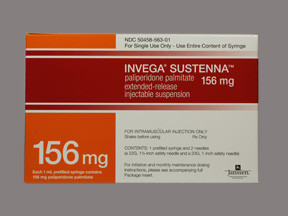
NDC 50458-563-01 Rx only Single-dose prefilled syringe. Use entire contents of syringe. INVEGA SUSTENNA (paliperidone palmitate) extended-release injectable suspension 156 mg/mL 156 mg/mL Each single-dose prefilled syringe contains 156 mg (1 mL) paliperidone palmitate. FOR INTRAMUSCULAR INJECTION ONLY Shake before using Each injection must be administered only by a healthcare professional. CONTENTS: 1 single-dose prefilled syringe and 2 needles (a 22G, 1 -inch safety needle and a 23G, 1-inch safety needle) Store at room temperature (77 F, 25 C); excursions between 59 F and 86 F (15 C and 30 C) are permitted. For initiation and monthly maintenance dosing instructions, please see accompanying full Package Insert. janssen
NDC 50458-564-01 Rx only Single-dose prefilled syringe. Use entire contents of syringe. INVEGA SUSTENNA (paliperidone palmitate) extended-release injectable suspension 234 mg/1.5 mL 234 mg/1.5 mL Each single-dose prefilled syringe contains 234 mg (1.5 mL) paliperidone palmitate. FOR INTRAMUSCULAR INJECTION ONLY Shake before using Each injection must be administered only by a healthcare professional. CONTENTS: 1 single-dose prefilled syringe and 2 needles (a 22G, 1 -inch safety needle and a 23G, 1-inch safety needle) Store at room temperature (77 F, 25 C); excursions between 59 F and 86 F (15 C and 30 C) are permitted. For initiation and monthly maintenance dosing instructions, please see accompanying full Package Insert. janssen